
Dubai Real Estate Investment 2026 Off Plan Buying Guide and Due Diligence Checklist
· 19 min read
Introduction: Why 2026 Is a Pivotal Year for Dubai Real Estate Investors
If you have been watching the real estate market in dubai, you already know 2025 was a standout year. Transaction volumes hit new all-time records. Prices climbed in prime areas. The market proved once again that it can outperform nearly every other global city for growth and demand.
But here is the thing. 2026 is shaping up to be just as important. For investors in dubai real estate, this year brings both serious opportunity and real complexity. Off-plan projects are booming, but they can be tricky to navigate. Rules change fast. And finding a single source of clear, honest information is harder than it should be.
That is where this guide comes in. We created a step-by-step roadmap to help you cut through the noise. Whether you are looking for tips for investing in real estate or need help with off plan property buying, this article gives you the facts you actually need. No fluff. No guesswork.
For a deeper look at current trends, check out our dedicated guide on how to buy property in Dubai in 2026. It covers the latest data on pricing, popular neighborhoods, and what to expect this year.
By the time you finish reading, you will understand the challenges, know how to manage risk, and feel confident about your next move.

The Dubai market is full of potential. You just need the right map to find it.
If you would rather talk to someone directly, you can get a FREE Dubai Real Estate Consultation to ask questions about buying, selling, or investing in the area.
Why Dubai Real Estate Remains a Lucrative Market for Global Investors in 2026
One big reason Dubai stands out in 2026 is the powerful mix of factors working together for investors.
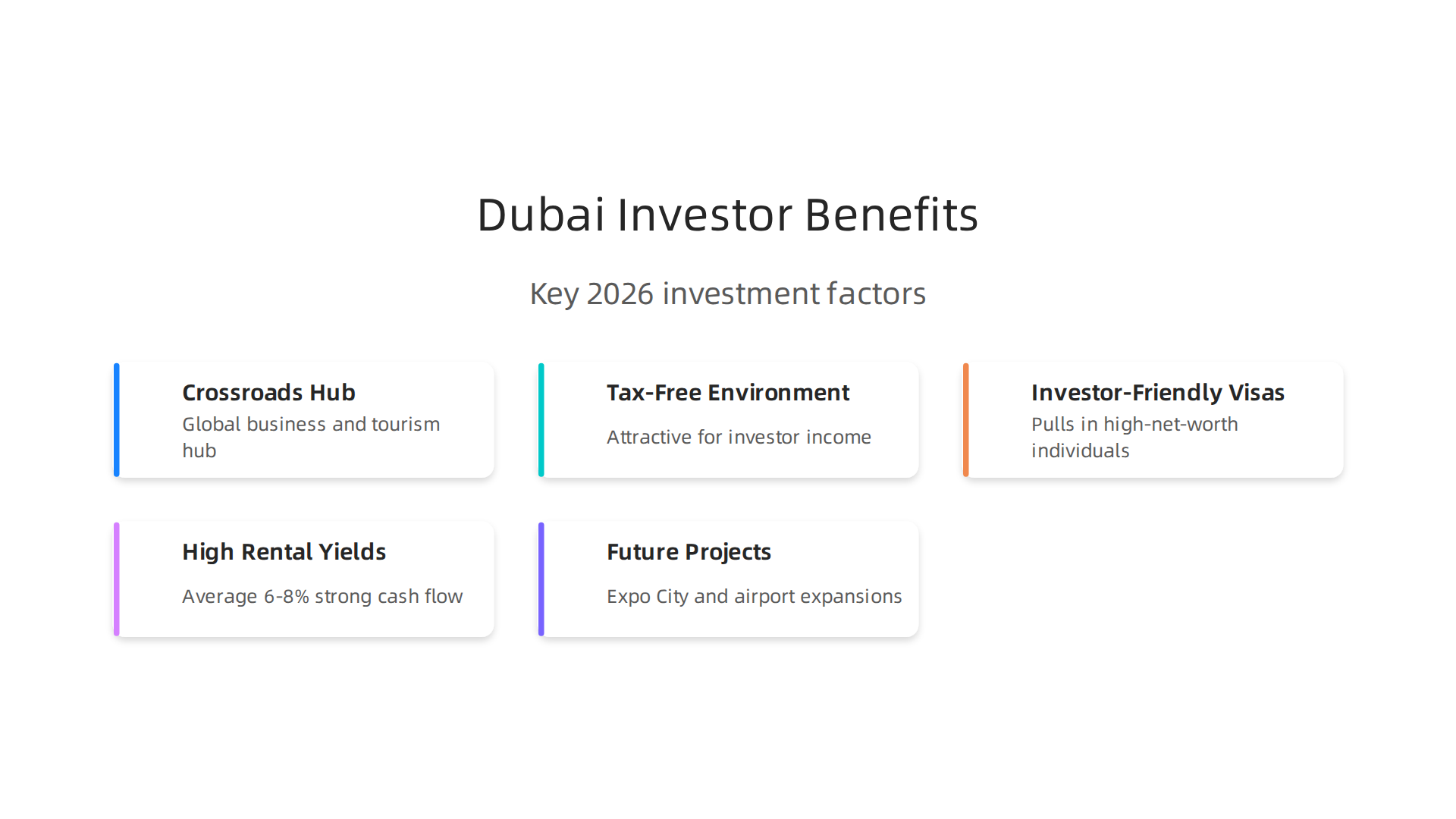
The city sits at a crossroads between Europe, Asia, and Africa, making it a natural hub for global business and tourism. Add a tax-free environment and investor-friendly visa policies, and you get a market that keeps pulling in high-net-worth individuals from all over the world.
The real estate market in Dubai has proven it can deliver. In May 2025 alone, transactions hit a historic AED66.8 billion across 18,700 deals. That kind of growth shows real confidence from buyers and sellers alike. You can see more details in the Dubai real estate market records in May 2025 report.
Rental yields are another reason to pay attention. In Dubai, average yields sit between 6% and 8%. Compare that to London at roughly 3% or New York at 4%, and the difference is huge. For investors in dubai real estate, that means stronger monthly cash flow and faster returns on your money.
The city also keeps building for the future. Projects like Expo City Dubai and the new airport expansions add long-term value. These large infrastructure efforts boost property prices in surrounding areas and make the whole city more attractive for residents and businesses. When you combine that with strong rental demand, your investment has a solid chance to grow in value over time.
Here is the thing. You do not need to be a millionaire to start. The off-plan segment gives smaller investors access to new developments at lower entry prices. And with clear government rules and a transparent title system, buying real estate in Dubai is safer than many other global markets.
If you are ready to take the next step, a good place to start is our complete guide on how to buy property in Dubai 2026 your strategic investor guide. It breaks down prices, neighborhoods, and the exact process you need to follow.
The numbers do not lie. Strong yields, smart infrastructure, and a business-friendly environment make Dubai a top choice for serious investors this year. The question is not whether to invest. The question is where to start.
Navigating Dubai’s Off-Plan Market: Risks, Rewards, and Due Diligence
For many investors in dubai real estate, the best entry point is off-plan property. These pre-construction units dominate new supply and come with attractive payment plans that let you pay in installments during construction, not all upfront. That lower financial barrier is a real reward.
But off-plan buying isn’t without risk. Project delays can push handover dates back by months or years. Some developers face financial trouble or even insolvency. And sometimes the finished unit looks different from the original brochure. That is why due diligence matters so much.
Before you sign anything, research the developer’s track record. Check how many projects they have completed on time. Visit their previous buildings. Talk to other buyers.
If you want a clear process, our guide on buying property in Dubai step by step walks you through every check.
The rewards of off-plan are real: lower prices, capital growth during construction, and modern designs. You can reach those rewards safely with the right homework.
Need a second opinion? FREE Dubai Real Estate Consultation from Ayaz Salman can help you vet any project before you commit.
Understanding Off-Plan Payment Plans and Escrow Account Protection
One of the biggest worries for investors in dubai real estate is: "What happens to my money if the project stalls?" That is where escrow accounts come in. The Real Estate Regulatory Authority (RERA) requires every registered off-plan project to use an escrow account. Your payments go into this account, and the developer can only withdraw funds after reaching specific construction milestones. This rule protects your money from misuse.
Before you sign anything, always confirm that the project is registered with RERA and that a proper escrow account exists. The Times of India’s 2026 investment guide on buying off-plan property explains why verifying escrow registration is a critical first step.
Payment plans for off-plan projects vary widely. Some developers offer a 50/50 split, where you pay half during construction and the other half at handover. Others use an 80/20 plan, with most payments due before completion. The trick is to match your payment schedule with the project’s real construction timeline.
For example, avoid plans that demand large payments early on, before key construction phases are finished. A smart approach is to choose a plan where your payments are tied to visible progress, like foundation completion or floor topping out. This way you only pay as the building takes shape.
If you want a deeper look at how to structure your investment around these protections, you can read our strategic investor guide for Dubai 2026. It covers payment plan strategies and more.
Red Flags in Developer Reputation and How to Vet Projects
A developer’s reputation can make or break your off plan property buying experience. Some investors skip this step because the brochure looks flashy. That is a costly mistake. Here are the warning signs to watch for and the simple ways to check a developer before you commit.
Red flags to spot
- Few completed projects. A developer with only one or two finished towers has a thin track record. You want someone who has delivered many properties on time.
- History of delays. If past projects were handed over months or years late, expect the same for your unit.
- Unresolved RERA complaints. Check if buyers have filed complaints against the developer. A pattern of disputes signals trouble.
- Vague or missing escrow details. If the sales team cannot show you the project’s RERA registration and escrow account number, walk away.
The LinkedIn article on 5 critical red flags in Dubai off-plan investing warns that developers with weak funding often lean on aggressive marketing instead of solid construction. Do not trust the hype alone.
How to vet a developer properly
Start by visiting the Dubai Land Department’s website. Look up the developer’s registration status and confirm that your specific project has a registered escrow account.
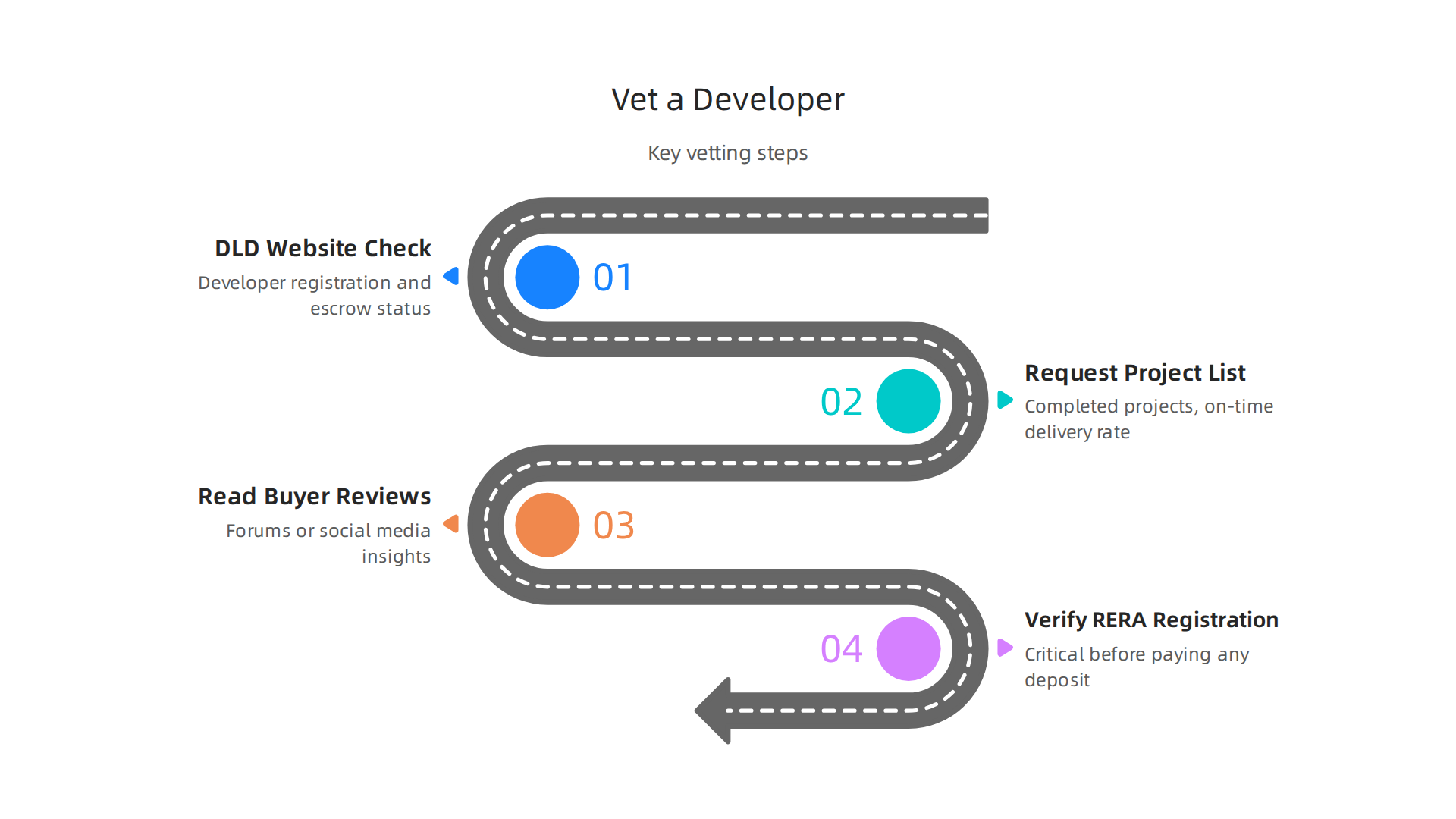
Also, request a list of the developer’s completed projects and check their on-time delivery rate. Reading reviews from real buyers on forums or social media can give you a clearer picture.
For a full step-by-step process, see our guide on how to buy property in Dubai in 2026. It walks you through every verification step.
Taking these extra minutes to research the builder gives you confidence and protects your money. If you would rather have an expert handle the due diligence, consider a FREE Dubai Real Estate Consultation with Ayaz Salman to get personalized advice before you sign anything.
The Legal Framework: What Every Foreign Investor Must Know
Now that you know how to check a developer’s reputation, you need to understand the legal rules. As an investor in Dubai real estate, you can own property in designated freehold areas. In other zones, you get a long-term lease instead.
The key authorities are the Dubai Land Department and RERA. They handle registration, escrow accounts, and legal checks. You also have to pay property registration fees. For a deeper look at how these rules protect your money, see how the Emirates Real Estate Corporation protects investors.
Following the law is a core tip for investing in real estate. It keeps your purchase safe and your paperwork straight.
Freehold vs Leasehold Areas: Where Can Foreigners Buy?
The first big question for investors in Dubai real estate is where you are actually allowed to own property. The answer comes down to whether an area is freehold or leasehold.
Freehold areas let foreign buyers own both the property and the land completely. You get a title deed registered with the Dubai Land Department. Some of the most popular freehold communities include Downtown Dubai, Dubai Marina, and Palm Jumeirah. These spots offer strong rental yields and high demand from tenants. For a complete picture of what is available, check out this list of top freehold areas in Dubai.
Leasehold areas work differently. In places like Deira and Al Karama, foreigners cannot buy the land. Instead, you get a long-term lease that can last up to 99 years. You can live in or rent out the property, but you do not own the land underneath. This can affect the long-term value of your investment.
Knowing the difference between freehold and leasehold is one of the most helpful tips for investing in real estate.

It shapes your ownership rights and resale options. If you want step-by-step help, read this strategic investor guide for buying property in Dubai.
Still unsure which area suits your budget and goals? Get a FREE Dubai Real Estate Consultation with Ayaz Salman to talk through your options.
The Role of the Dubai Land Department and RERA
Now that you know where you can buy, let’s talk about who makes sure everything runs smoothly. Two government bodies oversee the entire real estate market in Dubai: the Dubai Land Department (DLD) and the Real Estate Regulatory Agency (RERA).
The Dubai Land Department is the main authority for property registration. When you buy any property in Dubai, the DLD records your ownership and issues a title deed. This deed is your legal proof that you own the property. The DLD also handles dispute resolution if any issues come up between buyers, sellers, or developers. For a complete picture of registered properties, you can check this complete guide to freehold areas in Dubai, which explains how title deeds work in each community.
RERA is the regulatory arm of the DLD. Its job is to set the rules for developers, real estate brokers, and rental caps. RERA also approves off-plan projects and makes sure developers use escrow accounts to protect your money. This is one of the most important tips for investing in real estate: always verify that a developer is registered with RERA before you pay any deposit.
If you want to understand how rental caps affect your investment returns, read this guide to using the rental index in Dubai. It explains how RERA sets fair rent levels for different areas.
Both the DLD and RERA give investors in Dubai real estate the confidence that their transactions are safe and regulated. Knowing their roles is a smart step for anyone buying real estate in Dubai.
Community Master Planning: Finding the Right Neighborhood for Your Investment Goals
Once you understand the regulations, the next big decision is choosing the right neighborhood. Dubai’s master-planned communities, like Dubai Hills Estate and Arabian Ranches, offer great lifestyle amenities, but rental demand can vary a lot between areas. For example, average rental yields in Dubai Hills Estate hit around 6.35% for apartments in early 2026, according to the latest rental yield data for Dubai. But villa yields there sit closer to 4.98%.
To get the best return, think about factors like proximity to the metro, school catchments, and future development plans. A community near a new metro station often sees stronger demand.
If you want a deeper look at the buying process, check out this complete investor guide to buying property in Dubai. It walks you through the whole journey.
Not sure which community matches your goals? Connect with a local expert for a FREE Dubai Real Estate Consultation to get personalized advice.
Lifestyle vs ROI: Choosing Between Emerging and Established Communities
For most investors in Dubai real estate, the big question is whether to buy in a well-known community or take a chance on a newer, growing area. Each path comes with trade-offs between lifestyle, cost, and return.
Established communities like Dubai Marina, Downtown Dubai, and Palm Jumeirah offer strong rental demand and proven track records. The 2026 market insights from Engel & Voelkers show that apartments in Business Bay yield around 6.77%, while Jumeirah Lake Towers average 7.17%. These areas have full amenities, easy access to transport, and low vacancy periods. But you pay for that stability. Purchase prices are higher, so your upfront cost is bigger.
Emerging communities such as Jumeirah Village Circle, Discovery Gardens, and Dubai South offer lower entry points and often higher rental yields. For instance, Discovery Gardens yields 7.41% for apartments, and Dubai Investments Park reaches up to 8.53%, per the same data. These areas also have potential for capital appreciation if infrastructure projects and new developments boost demand. The trade-off is less immediate infrastructure and potentially slower initial tenant traffic.
Your choice should match your exit strategy. Are you here for cash flow, appreciation, or a flip?

If steady rental income matters most, an established neighborhood gives you confidence. If you want higher potential growth and are willing to wait, emerging communities work well. Many investors use off-plan property buying in developing areas to lock in lower prices before the area matures.
To decide wisely, research upcoming metro stations, school openings, and retail centers. This approach turns community planning into a powerful investment tool. A complete buyer’s guide for investing in Dubai real estate can help you compare areas side by side.
No matter which you pick, always connect the community’s character to your personal goals. That’s the smartest tip for investing in real estate in 2026.
Complete Due Diligence Checklist: From Booking to Handover
For smart investors in Dubai real estate, an off-plan purchase is an exciting step. But the real work starts before you sign anything. Skipping due diligence is one of the biggest mistakes in off plan property buying. Let us walk through the checklist that protects your money from the booking stage to the final handover.
Phase 1: Pre-Purchase Checks
This is where you build your foundation. Do not rush it.
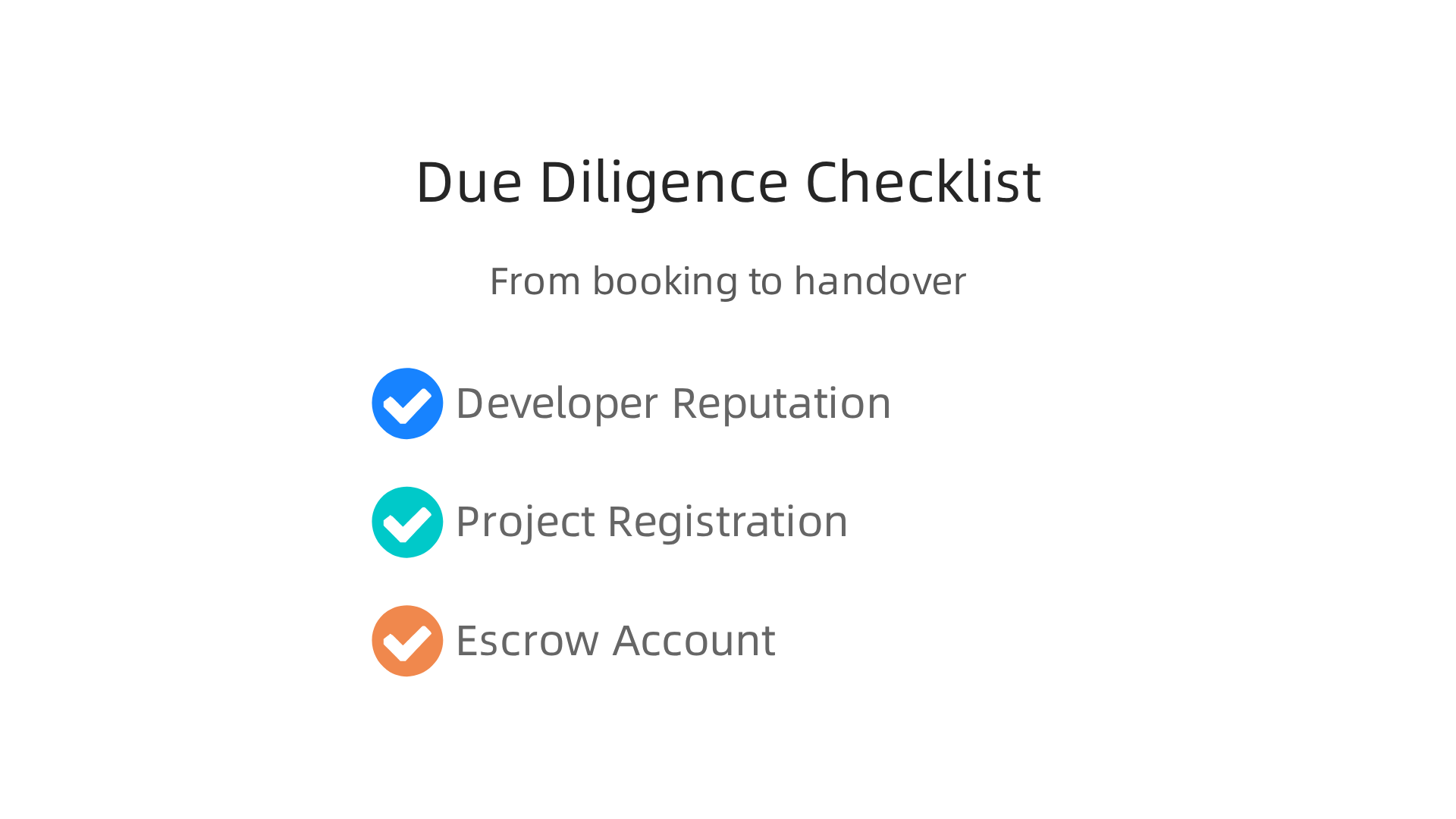
First, verify the developer reputation. Do not just trust the glossy brochure. Look at their past projects. Were they finished on time? Did buyers complain about quality? Reading up on the 5 critical red flags every investor must know is a great place to start before you commit a single dirham.
Next, check the project registration. Every legal off-plan project in Dubai must be registered with the Real Estate Regulatory Agency (RERA). Ask for the registration number. This gives you a government-backed layer of safety.
Finally, confirm the escrow account. This is a key step in buying real estate in Dubai. Your deposit and all future payments must go into a special escrow account. The developer can only access this money as they finish specific parts of the building. Without it, you are taking a much bigger risk. Understanding the risks of buying property in Dubai helps you know why this protection matters so much.
Phase 2: During Purchase
Once you book the unit, the Sales Purchase Agreement (SPA) becomes your most important document. Do not rush this step.
First, review the payment schedule carefully. Some plans look easy with small monthly payments but hide a huge balloon payment at the end. For example, you might pay 1% each month and then owe 40% when construction finishes. Make sure you can handle the full timeline.
Next, look for penalty clauses. What happens if the developer is late? What happens if you miss a payment? Your contract should clearly state the rules for both sides. You can review the Top 10 FAQs about buying off-plan properties in Dubai to find common questions about this stage of the process.
Phase 3: Pre-Handover
The project is nearly finished. Now you need to protect your investment before taking the keys.
Start with a final inspection. Go walk through your new unit. Bring a checklist. Check every switch, every tap, and every tile. Does the finished product match what was promised in the showroom?
Then handle snagging. Write down every single problem you find. Scratched countertops, paint issues, or leaking taps. The developer must fix all of these before you sign off and take possession.
Finally, get the No Objection Certificate (NOC). This document from the developer proves you have paid everything. Without it, you cannot transfer the property into your name. Do not skip this step.
Following this checklist is one of the smartest tips for investing in real estate in 2026. It turns a confusing process into simple, manageable steps. If you want a guide that covers the whole journey, check out this detailed step by step guide to buying property in Dubai.
Buying, selling, renting, or investing in Dubai? Connect with Ayaz Salman for FREE Dubai Real Estate Consultation.
Market Timing, Volatility, and Risk Management for Dubai Real Estate Investors
Now that you know how to handle the paperwork and inspections, let us talk about something bigger: when to buy and how to protect yourself from market swings.
Dubai’s real estate market does not move in a straight line. It cycles. History shows us clear patterns. The 2008 financial crisis caused prices to drop 50 to 60 percent in some areas. Then came a fast recovery. From 2014 to 2020, a slower correction took 30 to 40 percent off values. The post-COVID boom pushed prices up roughly 60 percent between 2022 and early 2025. Understanding these real estate market in Dubai cycles helps you avoid buying at the top and panicking at the bottom.
So what drives these ups and downs? Look at macro factors. Oil prices affect regional wealth. Global interest rates influence how much banks lend. Population growth and visa rule changes also play a big role. For example, the golden visa program brought in many new buyers after 2020. If you watch these signals, you can make better timing decisions.
But even the smartest investors cannot predict the exact peak or trough. That is why risk management matters more than perfect timing. Here are three strategies for smart investors in Dubai real estate:
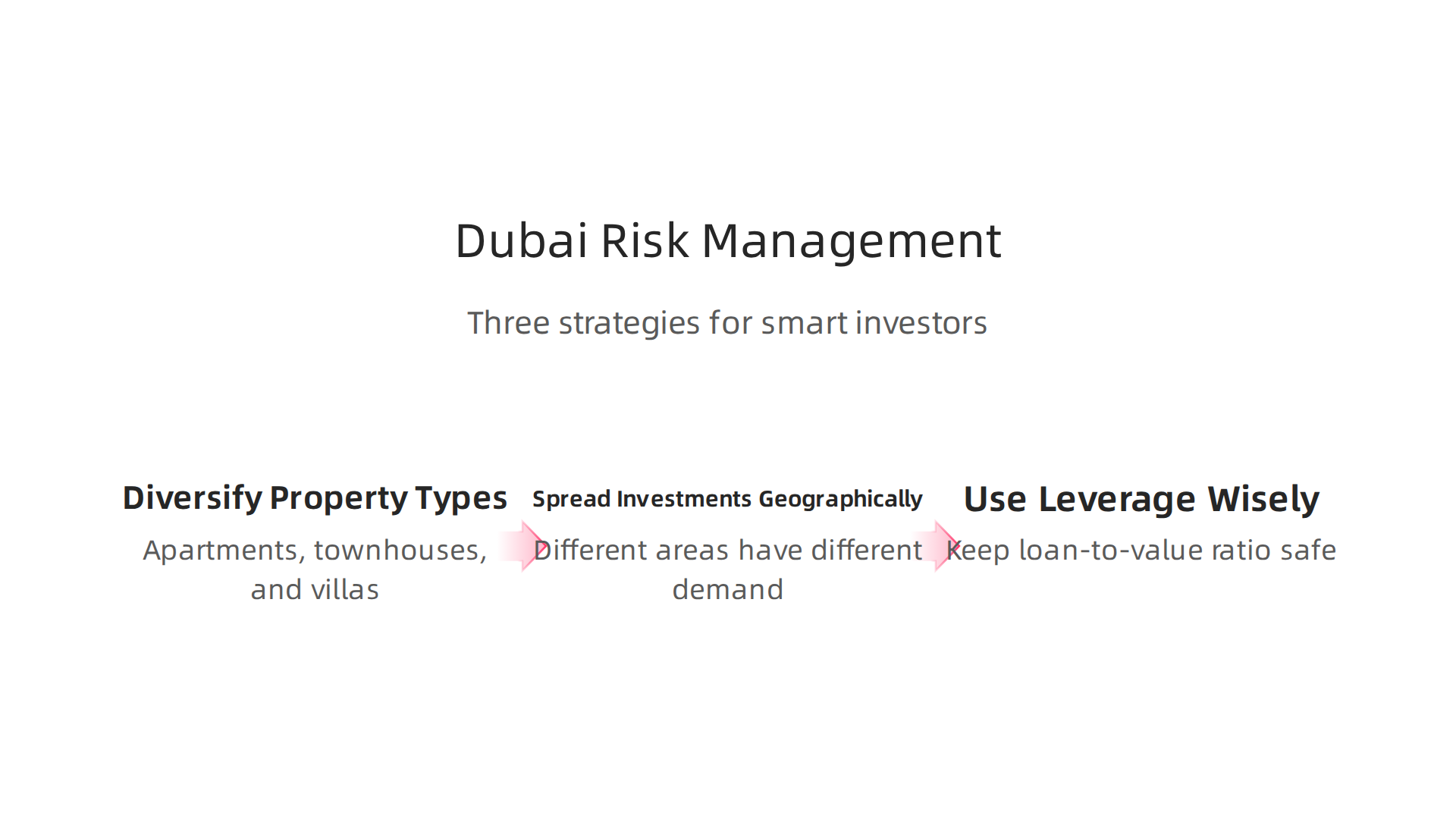
Diversify across property types. Do not put all your money into one kind of property. Apartments, townhouses, and villas behave differently during market shifts. According to recent analysis, the overall market recorded over 200,000 residential transactions in 2025, but each segment had its own story. Apartments made up 82.8 percent of volume while villas held higher average prices. A mix smooths out your risk.
Spread your investments geographically. Different areas in Dubai have different demand and supply. Places like Dubai Marina, Business Bay, and Palm Jumeirah are prime locations. Up-and-coming communities such as Al Barsha South and Wadi Al Safa may offer more value. You can review the historical price trends across different communities to see how each area performed during past corrections.
Use leverage wisely. Borrowing money can boost your returns when prices go up. But it can also hurt you badly during a downturn. Keep your loan-to-value ratio safe. Have a cash buffer for payments if the market slows.
One more tip: do not try to time the market perfectly. Instead, buy when you find a good deal and a solid developer. Hold your property for at least five to seven years. That is long enough to ride out the normal cycles.
History shows that every correction in Dubai has been followed by a recovery. Those who stayed calm and kept a long-term view came out ahead. For more detailed tips for investing in real estate in 2026, check out this strategic investor guide. It covers market trends and top areas to focus on this year.
Buying, selling, renting, or investing in Dubai? Connect with Ayaz Salman for FREE Dubai Real Estate Consultation.
Summary
This guide explains why 2026 is a pivotal year for Dubai real estate and gives a practical roadmap for investors, especially those considering off-plan projects. It covers the market case for Dubai — strong transaction volumes, high rental yields, and major infrastructure projects — and then walks you step-by-step through the critical checks: developer vetting, RERA registration, escrow accounts, payment-plan structures, and contract review. You will learn how to spot red flags, run through a pre-purchase and pre-handover checklist, choose between freehold and leasehold locations, and match neighborhoods to your goals for cash flow or capital growth. The article also explains the roles of the Dubai Land Department and RERA, offers simple risk-management tactics like diversification and conservative leverage, and recommends holding periods to ride out cycles. By the end you’ll know what documents to request, which warning signs to avoid, and how to make a confident, safer investment decision in Dubai this year.