
How to Rent Property Dubai in 2026 Without Getting Overcharged
· 16 min read

Introduction: Navigating the Dubai Rental Market Confidently
So you are thinking about renting a home in Dubai. Maybe you are moving here for work, or you are an expat looking for a new place. The truth is, hunting for a rental in this city can feel overwhelming. Between rising prices, confusing contracts, and dozens of neighborhoods, it is easy to make a costly mistake. But with the right knowledge, you can skip the stress and find the perfect home.

Dubai’s rental market in 2026 is dynamic and still going strong. Experts predict rents could rise up to 6% this year, especially in hot spots like Downtown Dubai, Dubai Marina, Palm Jumeirah, and Business Bay ([[Times of India]]). On average, a one-bedroom apartment now costs around AED 90,000 per year, while a three-bedroom apartment sits near AED 192,000 ([[Consultancy-me]]). That is a big chunk of change. Understanding the landscape helps you avoid overpaying or signing a bad deal.
This guide pulls together everything you need to know to rent property Dubai with confidence. We cover the legal rules, the financial steps, and the practical tips that make the process smooth. You will learn how to research neighborhoods, check contracts, negotiate rent, and avoid common traps. We also tackle the biggest pain points: information overload, legal complexity, and cultural barriers that many expats face when searching for a new home.
Whether you are looking for a modern apartment in the Marina or a spacious villa for rent Dubai with a private garden, this guide has you covered. The key is to start with the right information and a clear plan.
If you want personal help from someone who knows the market inside out, you can connect with Ayaz Salman on WhatsApp for a free consultation. No pressure, just honest advice to help you find the right rental.
Let’s jump into the first step: understanding the legal side of renting in Dubai.
Understanding the Dubai Rental Market Landscape in 2026
So what is really happening in the Dubai rental market right now? The short answer is that demand is still strong, and prices are climbing in the most popular areas. But the bigger picture is more interesting than just a straight line up.
A few big factors are driving the market.

First, Dubai’s population keeps growing. More people are moving here for jobs, lifestyle, and safety. That means more people need a place to live. Second, the government is focused on economic growth, which brings new businesses and workers into the city. Third, there is new supply coming online in some areas, but not always where people want to live most.
Here is what the numbers tell us. Experts predict rents could rise up to 6% in 2026, especially in hot spots like Downtown Dubai, Dubai Marina, Palm Jumeirah, and Business Bay ([[Times of India]]). Right now, a one-bedroom apartment rents for around AED 90,000 per year on average. A three-bedroom apartment goes for about AED 192,000 ([[Consultancy-me]]). Those are the big numbers, but they change a lot depending on the neighborhood you pick.
Now, not every area is seeing the same growth. Affordable neighborhoods like International City and Dubai Silicon Oasis saw rents jump over 20% in 2025, which was actually faster than some of the fancy areas ([[Sands of Wealth]]). That means you can still find good deals if you know where to look. The key is to match your budget with the right area.
Seasonal demand also plays a big role in pricing and availability. The market tends to be busiest from September to November and again from January to March. That is when most expats move, and landlords know they can ask for higher prices. If you can wait until the summer months, you might have more room to negotiate because fewer people are looking.
Emerging communities like Dubai South, Jumeirah Village Circle, and Town Square are becoming more popular. They offer newer buildings, more space, and lower rents compared to older areas. For example, a villa for rent Dubai in one of these newer communities might cost much less than a similar villa in the Palm or the Springs. That is worth thinking about if you want more square footage without the crazy price tag.
The market in 2026 seems to be moving toward a more balanced state ([[Oplus Realty]]). It is not a crazy boom like a few years ago, but it is also not a crash. Rents are adjusting slowly based on real demand. That is good news for renters because it means fewer sudden surprises.
Understanding these trends helps you pick the right moment and the right area to find a home.

But putting all this knowledge into action can still feel tricky. That is why it helps to have someone who knows the market inside out.
If you want personal guidance tailored to your situation, you can connect with Ayaz Salman on WhatsApp for a free consultation. No pressure, just honest advice to help you find the right rental at the right price.
Up next, we will break down the legal rules you need to know before signing any contract.
Tenant Rights and Legal Protections Under Dubai Tenancy Law
You might be wondering what happens if your landlord tries to raise the rent too much or asks you to move out without notice. The good news is that Dubai has strong laws to protect you.
The main law is called Law No. 26 of 2007, which has been updated a few times since then. It clearly spells out the rights of both tenants and landlords (EGSH).
Ejari Registration Is Not Optional
First things first. Every rental contract in Dubai must be registered with Ejari. This is the official system run by the Real Estate Regulatory Authority, or RERA (RERA Tenancy Law Provisions). Without Ejari registration, your contract is not legally recognized. That means if a problem comes up, you have little protection.
Ejari also links your tenancy to your DEWA utility account. So if you skip registration, you might struggle to get electricity and water connected. It is a simple step, but it matters a lot.
How Rent Increases Are Controlled
Landlords cannot just raise the rent whenever they feel like it. Under Article 14 of Law No. 26 of 2007, your landlord must give you written notice of any proposed rent increase (Chambers). That notice must come at least 90 days before your contract ends.
RERA also publishes a Rental Increase Calculator on its website.

This tool tells you the maximum percentage a landlord can raise the rent based on the current market rate in your area. If your landlord tries to charge more than what the calculator allows, you can dispute it.
Your Right to Renew the Lease
Here is something many people do not know. If you have followed the terms of your contract, you have a right to renew the lease (Chambers). Your landlord cannot just refuse to renew it because they want a higher paying tenant. They can only end the lease in specific situations, like if they plan to move in themselves or sell the property. Even then, they must give you 12 months notice.
What Happens If Something Goes Wrong
If you and your landlord cannot agree on something, the Rental Dispute Settlement Centre handles these cases. They are part of the Dubai Land Department. They can help with issues like unfair rent hikes, deposit disputes, or maintenance problems. The process is usually quick and does not require a lawyer.
The official tenancy guide from the Dubai Land Department explains all these rules in detail (Tenancy Guide). Reading it can save you a lot of headaches later.
Understanding these rights gives you confidence when you rent property in Dubai. You know what is fair and what is not. But putting together all these pieces can still feel like a lot. If you want someone to walk you through the process step by step, feel free to Contact Our Team. We can help you find the right villa for rent in Dubai or any other real estate properties in Dubai that fit your needs.
Step-by-Step Guide to Renting a Property in Dubai
So you know your rights as a tenant in Dubai. That is a great start. Now, let’s walk through the actual steps you will take to rent property in Dubai.
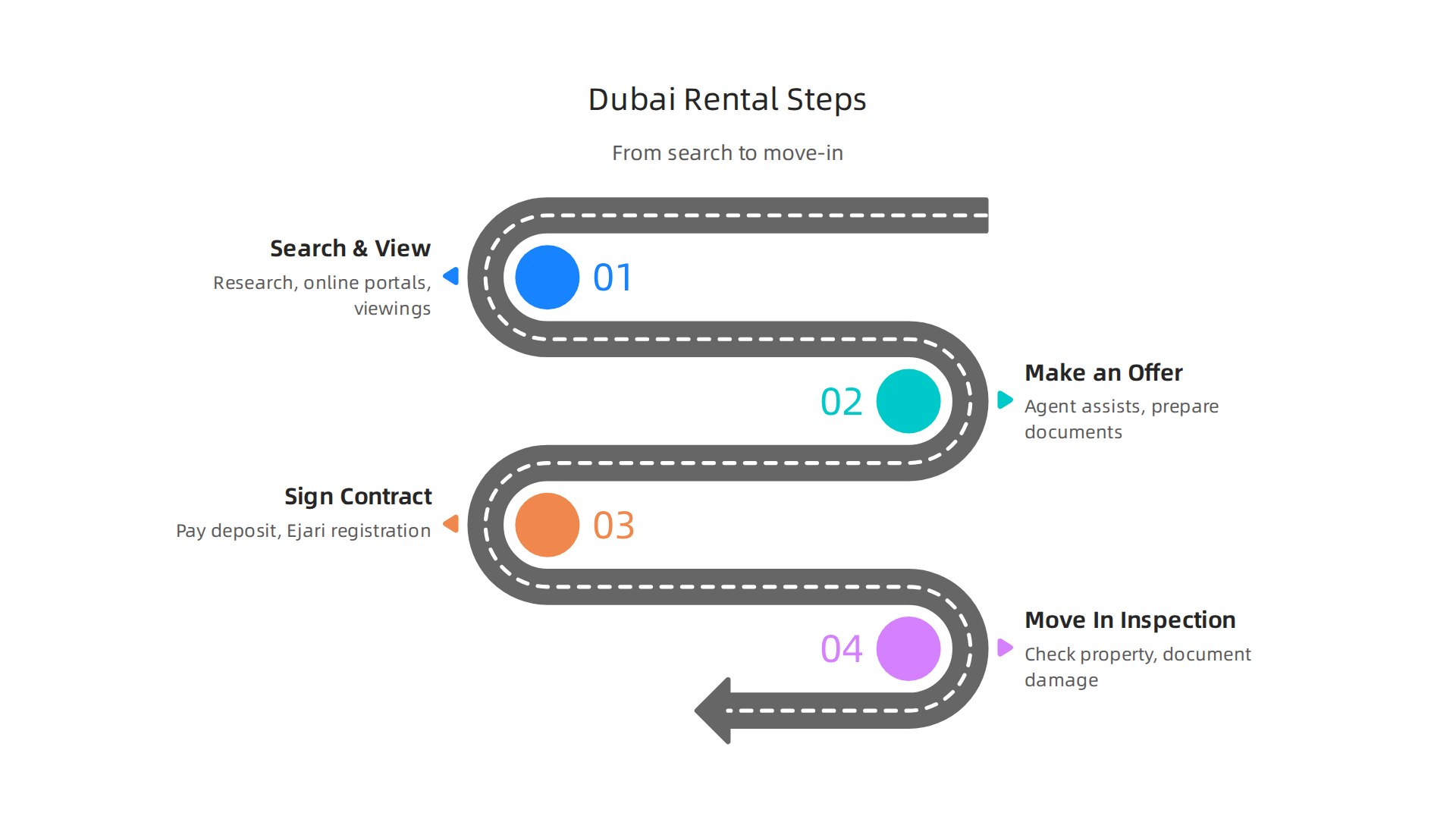
The process is not as hard as it sounds once you break it down.
Phase 1: Search and View Properties
First, figure out what you need. Do you want a villa for rent in Dubai or a modern apartment? Make a list of your must-haves, nice-to-haves, and deal-breakers. This helps you stay focused when you start browsing online (Driven Properties).
Use trusted property portals to explore what is available. When you find a few options you like, schedule in-person viewings. Never rent a place without seeing it first. A video tour can help, but actually walking through the unit shows you things the photos might miss.
Phase 2: Make an Offer and Gather Documents
Found a place you love? Your agent will help you make an offer to the landlord. If the landlord agrees, it is time to prepare your documents. You will need:
- A copy of your passport
- A copy of your valid UAE visa
- Your Emirates ID
- Proof of income, like a salary certificate or recent bank statements (Property Finder)
The agent will then create a formal agreement called a Memorandum of Understanding. This document outlines the rent amount, payment schedule, and other key terms.
Phase 3: Sign the Contract and Register with Ejari
Once both sides agree, you sign the tenancy contract. At this stage, you also pay:
- Security deposit: Usually 5% of the annual rent for an unfurnished place
- Agency commission: Typically 5% of the annual rent plus a 5% VAT fee
After signing, your agent must register the contract with Ejari. This step is critical. As we talked about earlier, Ejari registration makes your contract legally valid and links it to your DEWA account so you can get utilities connected.
Phase 4: Do a Move-In Inspection
Before you bring in your furniture, do a careful walkthrough.
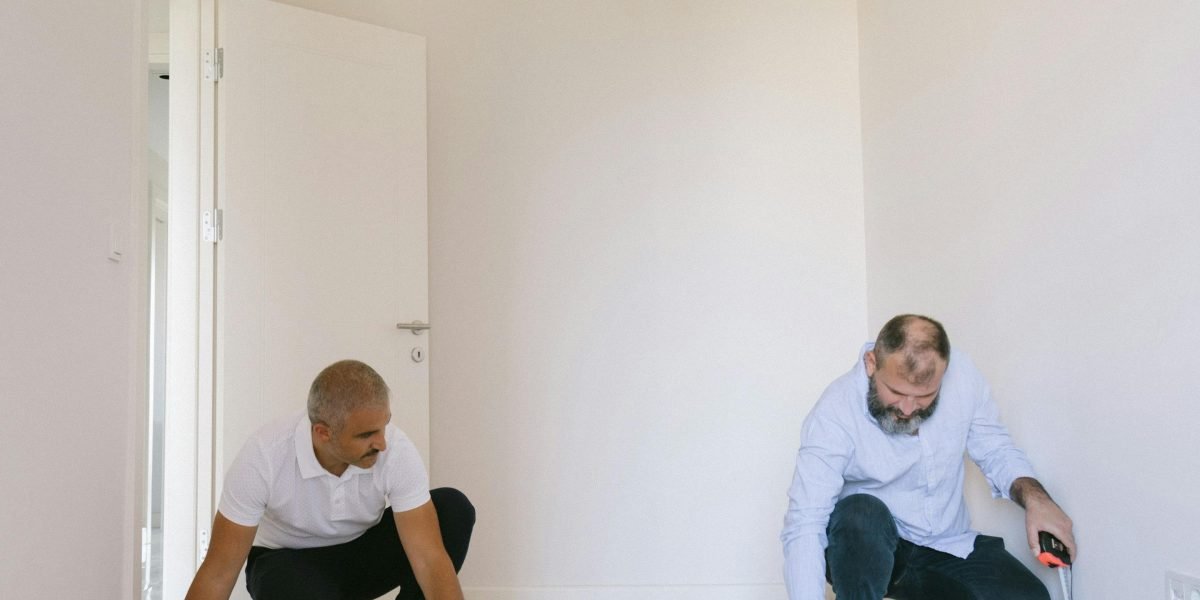
Check every wall, floor, and fixture. Take photos and videos of any existing scratches, stains, or damage. Share this report with your landlord or agent. This simple step protects your security deposit when you eventually move out.
The whole process to find dubai properties rent is straightforward when you follow these steps. But it is okay to want some extra help along the way. If you would like an expert to guide you through finding the right real estate properties in Dubai, we are happy to assist. Contact Our Team to start your search today.
Now that you know the steps to rent property in Dubai, let’s talk about the money. Many people find their dream villa for rent in Dubai only to realize the upfront costs are higher than they planned. Knowing what to budget for will save you stress.
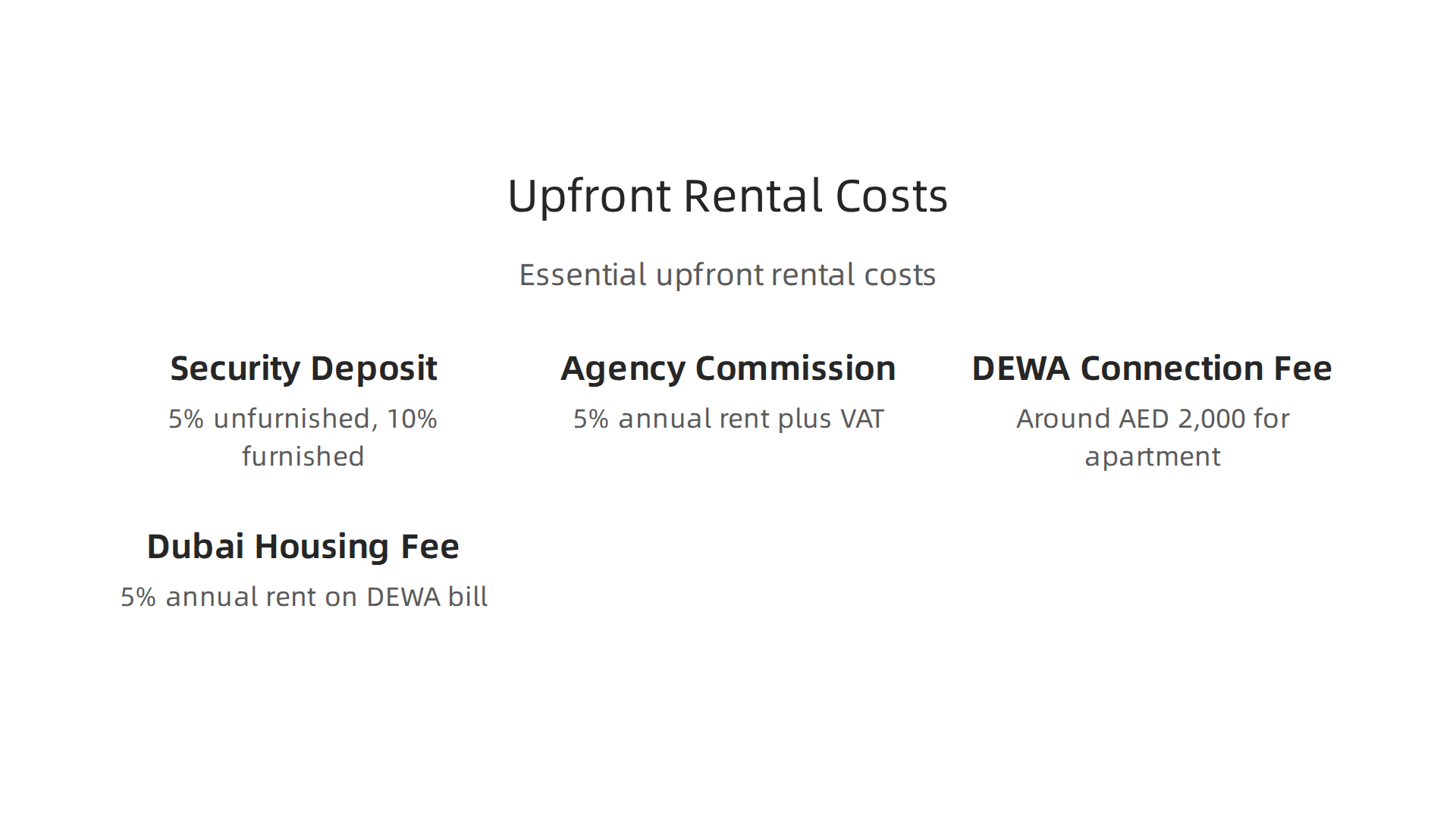
Here is a breakdown of the major costs you will face when you rent property dubai.
Major Upfront Costs
These are the fees you usually pay on day one.
- Security Deposit: This covers any damage to the unit. Expect to pay 5% of the annual rent for an unfurnished place and 10% for a furnished one. You get this back when you move out.
- Agency Commission: Your agent handles the search and paperwork. Their fee is usually 5% of the annual rent plus 5% VAT. This is a single payment.
- DEWA Connection Fee: You need electricity and water, right? DEWA charges a connection fee. For an apartment, it is often around AED 2,000. It is higher for a villa (Property Finder).
- Dubai Housing Fee: This is a 5% fee on your annual rent. It gets added to your monthly DEWA bill. So, you pay a little extra each month for the municipality.
Hidden Costs to Watch For
After you move in, other costs pop up.
- Home Insurance: Insuring your furniture and belongings is not required by law, but it is a smart move.
- Maintenance Duties: Read your contract closely. The landlord handles big structural repairs. You usually handle minor fixes, lightbulbs, and pest control.
- Early Termination Penalty: Plans change. If you break your lease early, you will pay a penalty. This is often two or three months of rent. Always check this clause before you sign.
How to Plan Your Budget
You can use the Dubai Rent Calculator to add up all these fees.
It turns a confusing list into a simple total.
If you want to avoid surprises while searching for real estate properties in Dubai, expert help makes a big difference. A good agent can explain every fee for each property before you pay anything.
Ready to find a place that fits your budget?
Connect with Ayaz Salman on Whatsapp
Or, if you want to keep learning first, browse our resources and Contact Our Team to start your search.
Renewals, Rent Increases, and Eviction Rules
Okay, you have the budget figured out. But what happens when your one-year lease is almost up? Do you have to move? Can your landlord raise the rent? Knowing the rules around renewals, rent hikes, and evictions is just as important as the upfront costs. It protects your peace of mind and your wallet.
Let’s start with renewals. The good news is that if you have followed the rules of your tenancy contract, you have the right to renew. Your landlord cannot just refuse to renew without a valid reason. This is protected under Dubai’s tenancy law (Chambers – Navigating the Landlord–Tenant Relationship). So keep paying on time and take care of the place.
Now talk about the big one: rent increases. Your landlord might want to charge more for the next year. But they cannot just pick any number. Dubai has a system for this. The Real Estate Regulatory Authority (RERA) publishes a rental index. This index shows the average rent for similar properties in your area. The RERA Rental Increase Calculator uses this index to tell you the maximum legal increase.
Here are the rules you need to know:
- Your landlord must give you 12 months’ written notice before increasing the rent (Chambers – Analysis of the Regulatory Framework).
- If the notice is shorter than 12 months, the increase is not valid.
- You can check the allowed increase using the calculator on the RERA website or app.
What about eviction? Landlords can ask you to leave, but they also need to follow strict rules. For most evictions (like when the landlord wants to move in or renovate), they must give you 12 months’ notice through a notary or registered mail. There is one big exception: if you do not pay rent, the eviction process can start much faster (EGSH – Dubai Rental Law 2026).
If you believe your landlord is asking for an unfair increase or trying to evict you for the wrong reasons, you have options. You can file a case at the Rental Dispute Settlement Centre (RDSC). This court handles all rental disagreements in Dubai.
Dealing with lease renewals and potential increases can feel overwhelming. A little bit of legal knowledge goes a long way. And if you ever feel unsure, having a trusted expert on your side makes everything smoother.
Ready to find a home where you will feel secure for the long term?
Connect with Ayaz Salman on Whatsapp for a free consultation. He can help you understand every lease clause before you sign.
Or, if you prefer to explore more resources first, Contact Our Team to get started.
Top Residential Areas for Renters: A Detailed Comparison
Now that you know your rights around renewals and rent increases, it is time to pick the perfect neighborhood. Choosing where to live in Dubai can feel like a big decision. The city has so many different areas, and each one offers a totally different lifestyle.
Your choice really comes down to what matters most to you. Do you want to be near the action? Or do you prefer a quiet, family-friendly street? Let us break down the most popular spots for rent property dubai in 2026.
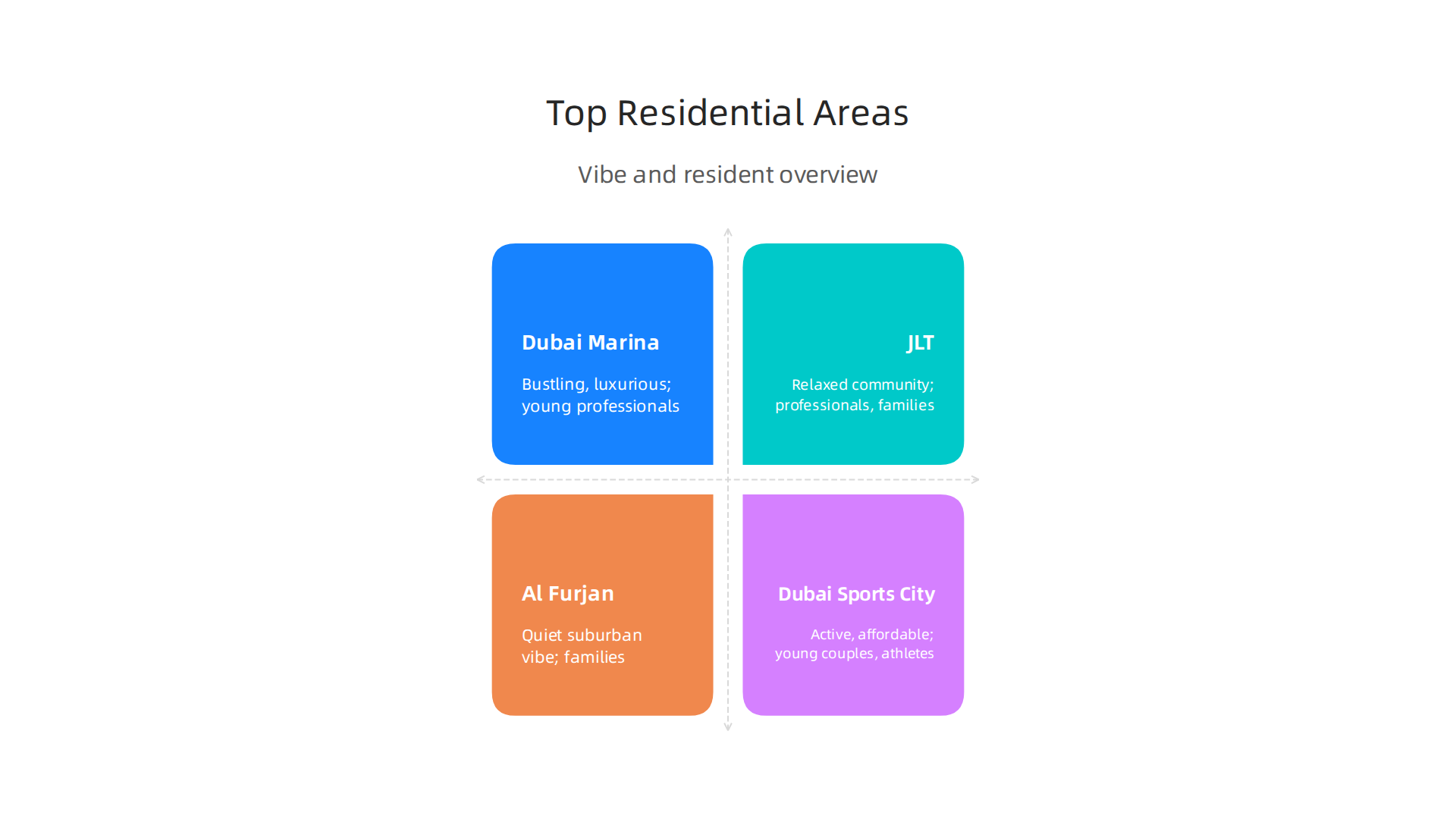
Premium Neighborhoods for the City Life
If you love being in the middle of everything, areas like Dubai Marina and Downtown Dubai are hard to beat. You get amazing views, trendy cafes, and you are close to the best restaurants and nightlife. But this lifestyle comes at a cost. Higher rent increases are expected in these high-demand areas in 2026 (Times of India). Dubai properties rent here is premium.
Vibrant Communities for Professionals
Jumeirah Lakes Towers (JLT) is another favorite. It has a more relaxed, community feel compared to the Marina, with plenty of parks and jogging tracks. Business Bay is great if you work in the area and want a short commute. These areas are well-connected, so you can easily reach most parts of the city.
Budget-Friendly Options
Do not worry if your budget is tighter. You can still find fantastic real estate properties in dubai without breaking the bank. Check out these areas:
| Area | Vibe | Typical Resident | Estimated Rent (1-bed) |
|---|---|---|---|
| Dubai Marina | Bustling, luxurious | Young professionals, couples | AED 90,000+ annually |
| JLT | Relaxed, community-focused | Professionals, families | AED 75,000 – 90,000 annually |
| Al Furjan | Quiet, suburban | Families | AED 60,000 – 75,000 annually |
| Dubai Sports City | Active, affordable | Young couples, athletes | AED 50,000 – 65,000 annually |
Places like Al Furjan and Dubai Sports City offer great value. They are a bit further out, but you get more space for your money. The commute to the city center takes a bit longer, but many people find the trade-off worth it.
Family-Friendly Communities
If you have a family, the priority changes. You want safe streets, good schools, and green spaces.

Communities like Arabian Ranches, The Springs, and Mirdif are perfect for this. They are quiet, have parks, and playgrounds. Finding a villa for rent dubai in these areas is a popular choice for families.
Still feeling unsure about which area is right for you? It helps to talk to someone who knows the market inside and out.
Connect with Ayaz Salman on Whatsapp for a free consultation. He can help you find a neighborhood that fits your lifestyle and budget perfectly.
Summary
This guide explains how to rent property in Dubai in 2026, covering market trends, legal protections, practical steps, and budgeting so you can find a home without surprises. It summarizes current price levels and demand drivers, shows which neighbourhoods offer premium or budget options, and walks you through searching, viewing, offering, signing, registering with Ejari, and moving in. The article details tenant rights, how rent increases are controlled, renewal and eviction rules, and where to take disputes. It also breaks down upfront and hidden costs—security deposit, agent commission, DEWA fees, and municipality charges—and offers inspection and negotiation tips. Read this to know what documents you need, how to protect your deposit, when to negotiate, and how to avoid common mistakes as an expat or local renter.