
Luxury Homes Dubai for Sale 2026 Buyers Guide and Investment Strategy
· 18 min read
Introduction: Why Dubai Luxury Real Estate Remains a Top Global Investment
Picture this. You are looking at luxury homes dubai for sale, scrolling through stunning photos of villas with private pools and skyline views. It feels exciting, but also a little overwhelming. Where do you even start?
Here is the good news. Dubai’s luxury property market has shown steady growth and resilience, even as global markets shift. High net worth individuals from around the world continue to choose Dubai for its safety, lifestyle, and strong returns. In fact, as of July 2026, average residential rental yields in Dubai sit at an attractive 6.58%, according to the Dubai Housing Market 2026 mid year review. That is much higher than what you would find in cities like London or New York.
One major reason investors keep coming back is the tax free environment. You can earn rental income without paying property taxes. Add in a stable economy backed by the government, and you have a recipe for long term wealth.
But buying a luxury home is not just about the perks. It is about making the right choice. With so many off plan projects, new communities, and price ranges, you need a clear plan.
That is exactly what this guide offers. A simple, data driven framework to help you navigate the buying process, compare top communities, and maximize your return on investment. Whether you are searching for a dubai luxury home for sale as a primary residence or an income producing asset, this roadmap will save you time and money.
Ready to get started? You can also connect directly with an expert for personalized advice. Reach out for a FREE Dubai Real Estate Consultation to ask questions and get clarity on your next move.
And if you want to dive deeper into the process first, check out this helpful luxury villa for sale dubai guide for step by step tips.
1. Why Invest in Dubai Luxury Real Estate in 2026?
So you are thinking about buying a dubai luxury home for sale this year. Smart move. But let us break down exactly why 2026 is such a strong year for investors.
First, the tax advantage is hard to beat. Dubai gives you a truly tax-free environment. No property tax. No capital gains tax. No income tax on your rental earnings. That means every dirham you earn from your luxury home for sale dubai stays in your pocket. Compare that to cities like London or New York, where taxes can eat up a big chunk of your returns.
Second, the government keeps making it easier for high net worth individuals to invest. The Golden Visa program lets investors get long term residency with a property purchase over AED 2 million. This stability matters. You are not just buying bricks and mortar. You are buying a future in one of the safest cities in the world.
Now let us talk about the numbers. Luxury property values have been climbing steadily. According to the United Arab Emirates’ Residential Property Market Analysis 2026 from Global Property Guide, villa prices in Dubai jumped 17.81% year-on-year as of early 2026.
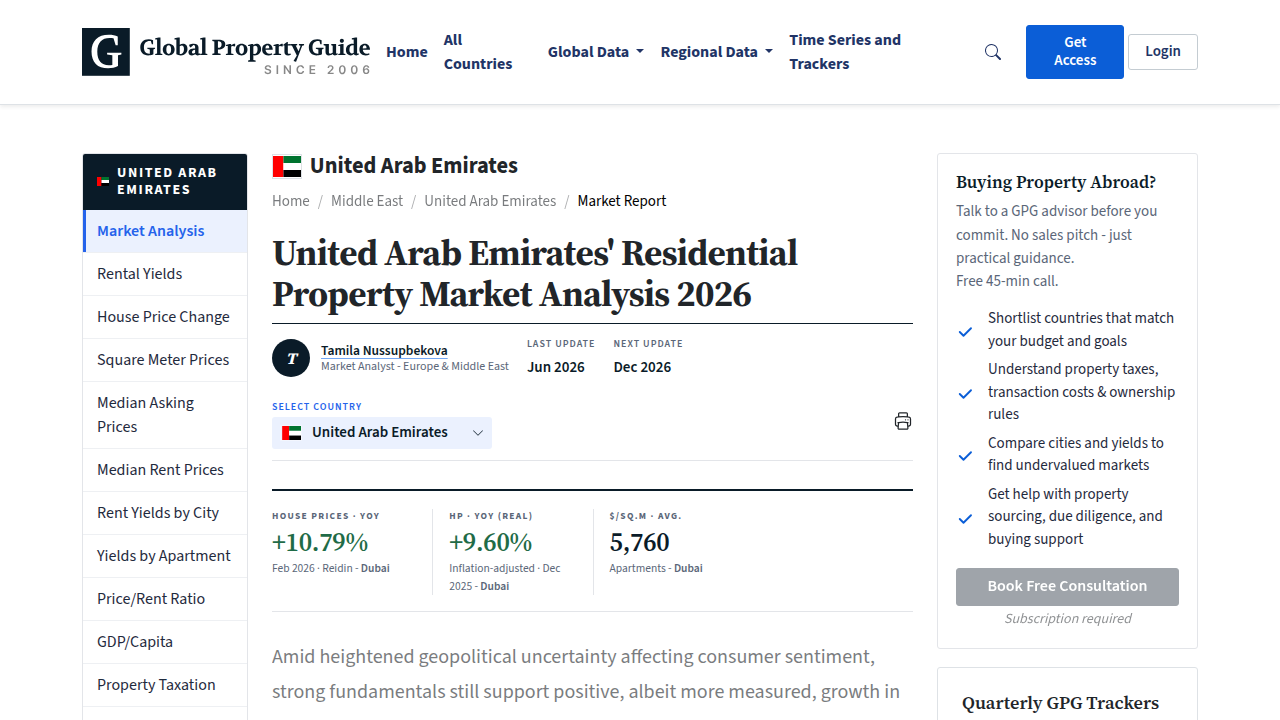
Apartments rose 15.22% over the same period. That is serious growth for a market that is already mature.
Some of the most exclusive neighborhoods have seen even bigger gains. Areas near the new Dubai Metro Blue Line stations could see property values jump by as much as 25% once that line opens in 2029, according to the Roads and Transport Authority. So buying now means you get in before that price spike.
The market is also cooling in a healthy way. Price appreciation is expected to moderate to 5% to 8% in 2026, down from double-digit growth in 2024 and 2025, as noted in the Property Price Forecasts Dubai (2026) report. That actually works in your favor. It means prices are stabilizing, not crashing. You are buying into a market with solid fundamentals, not a speculative bubble.
If you are new to the process, you might wonder how to find the right property and avoid mistakes. That is where a solid plan helps. Check out this detailed how to buy luxury real estate in Dubai in 2026 guide for step-by-step tips on what to look for before you sign anything.
Here is a quick summary of what makes 2026 special for Dubai luxury real estate:
| Benefit | What It Means For You |
|---|---|
| Tax-free income | No property tax or capital gains tax on rental earnings |
| Golden Visa | Long-term residency with AED 2M+ property purchase |
| Villa price growth | 17.81% year-on-year appreciation in luxury segments |
| Metro expansion | Up to 25% value boost near new Blue Line stations |
| Market moderation | 5% to 8% forecasted growth in 2026, healthy and stable |
Bottom line? Dubai’s luxury market in 2026 offers a rare mix of tax benefits, residency incentives, and property appreciation that is hard to find anywhere else. The fundamentals are strong. The demand is real. And for serious investors, the timing feels right.
2. Top Luxury Communities: Where to Buy Premium Villas and Apartments
You know why 2026 is the right time. Now comes the fun part. Where do you actually put your money? Dubai has plenty of luxury neighborhoods, but a few stand head and shoulders above the rest.
Let us start with the icon. Palm Jumeirah is still the most famous luxury address in the city. This man-made island offers beachfront villas and high-end apartments with views that stop you in your tracks. As of June 2026, villas here average around AED 8,070 per square foot, while apartments sit at roughly AED 4,240 per square foot, according to the Average Price per Square Foot in Dubai 2026 report. Prices range from AED 700,000 for a studio all the way up to over AED 750 million for a mega villa, as detailed in the Cost of the Palm Jumeirah Project breakdown. Rental yields here typically land between 5% and 9%, so you get both lifestyle and solid returns.
Emirates Hills is a different kind of luxury. Think of it as the Beverly Hills of Dubai. This gated community features large villas with private gardens and direct views of the golf course. It is one of the most exclusive addresses in the region. Properties here start around AED 15 million and climb steeply from there.
Jumeirah Bay Island takes privacy to another level. This boutique island has only a handful of ultra-luxury villas plus the Bulgari Resort. If you want a home where the neighbors are invisible and the beach is your backyard, this is it.
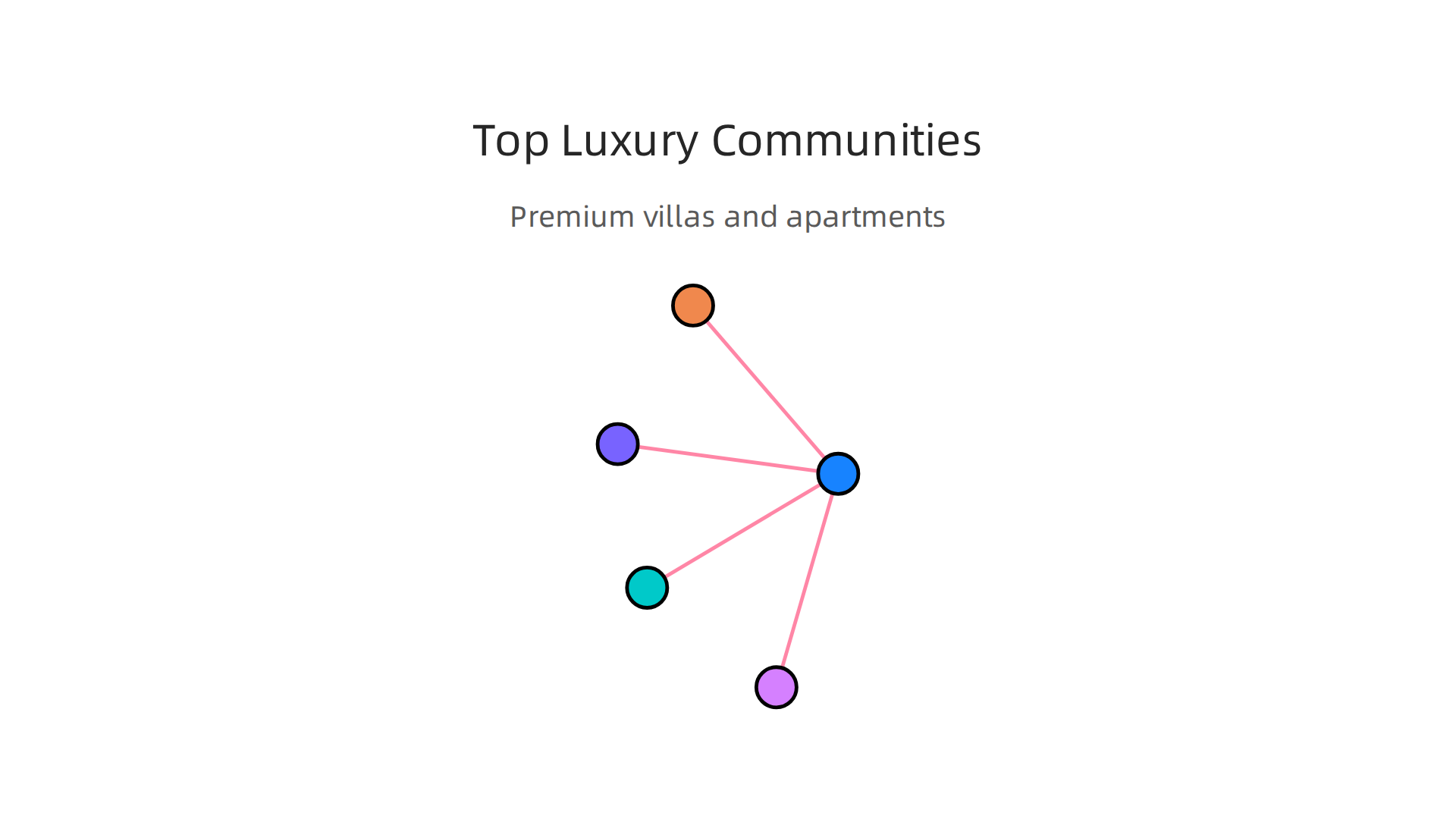
But here is the thing. Luxury in Dubai is not just about the old guard anymore. Dubai Hills Estate has become a top pick for buyers who want newer homes with modern floor plans. Villas here average around AED 2,896 per square foot in 2026. That is more accessible than the Palm but still firmly premium. The community has a championship golf course, plenty of parks, and easy access to the city center.
Then there is Tilal Al Ghaf. This is the new kid on the block, and it is turning heads fast. The community centers around a huge crystal lagoon with white sand beaches. Villas here average about AED 2,034 per square foot. It feels like a permanent vacation for families who want resort-style living every single day.
Here is a quick look at how these communities compare:
| Community | Avg Villa Price per Sq Ft (2026) | Vibe | Best For |
|---|---|---|---|
| Palm Jumeirah | AED 8,070 | Beachfront luxury | High ROI, showpiece homes |
| Emirates Hills | AED 5,000+ (approx.) | Gated golf estate | Privacy, prestige |
| Jumeirah Bay Island | AED 6,000+ (approx.) | Ultra-exclusive island | Total seclusion |
| Dubai Hills Estate | AED 2,896 | Modern golf community | Families, newer builds |
| Tilal Al Ghaf | AED 2,034 | Lagoon lifestyle | Resort living, value |
Your choice really comes down to what matters more to you. Beachfront status? Golf course serenity? Or a brand new community with modern everything?
If you are not sure which neighborhood fits your goals, you can get a FREE Dubai Real Estate Consultation with an expert who knows the local market inside and out. A quick chat can save you weeks of research.
And for more detail on what it takes to buy in these top villa neighborhoods, check out this complete guide on how to buy a luxury villa in Dubai in 2026. It covers the full process from viewing to closing.
3. The Buying Process: Step-by-Step Guide for International Buyers
So you have picked your dream neighborhood. Now comes the practical side. How do you actually buy a luxury home in Dubai as a foreigner?
Here is the good news. The process is simple and straightforward. International buyers can purchase freehold properties in designated areas with no restrictions on nationality. No special visa is required just to buy. The whole system is designed to welcome global investors.
Let me walk you through the steps so you know exactly what to expect.
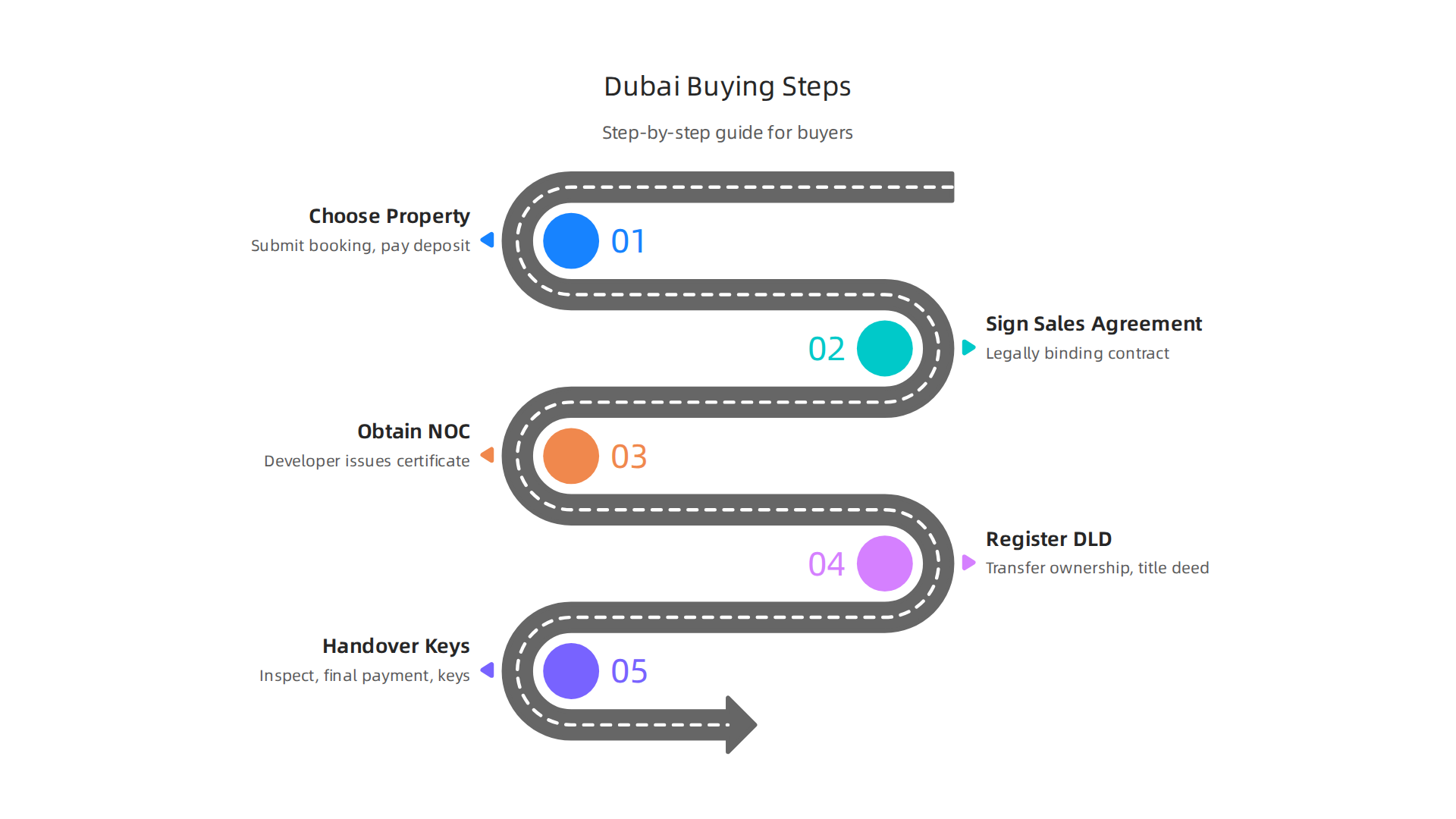
Step 1: Choose Your Property and Make a Reservation
Once you find a home you love, you submit a booking form and pay a deposit. This is usually 10% of the purchase price for resale properties and 5% to 20% for off-plan projects, as explained in the Legal Guide to Real Estate Investment and Property Rights in Dubai. This deposit holds the property and takes it off the market.
Step 2: Sign the Sales Agreement
This is the legally binding contract. For off-plan purchases, you sign a Sales and Purchase Agreement (SPA) with the developer.

For resale, you sign a Memorandum of Understanding (Form F) with the seller. The contract outlines your payment plan, completion date, and all terms. The full step-by-step guide to how to buy property in Dubai in 2026 covers exactly what to look for in these documents.
Step 3: Obtain a No Objection Certificate (NOC)
Before ownership can transfer, the developer must issue an NOC. This proves the seller has paid all service charges and there are no disputes on the property. Without it, the transfer cannot happen. It is a simple but vital step.
Step 4: Register with Dubai Land Department (DLD)
This is the big one. You and the seller (or your representatives) go to a DLD trustee office. You pay the 4% transfer fee to the government, plus a small admin fee of around AED 3,000 to AED 5,000. After that, you receive your title deed. You officially own a luxury home in Dubai.
Step 5: Handover and Keys
For ready properties, you inspect the home, make the final payment, and receive your keys. For off-plan, you wait for construction to finish and then the developer hands over the unit.
That is it. Five steps from start to finish. The entire process can take as little as two to four weeks for a cash purchase.
One last thing. If you are buying off-plan, you need to do extra homework on the developer. Check out this detailed off-plan buying guide and due diligence checklist to make sure your investment is safe.
The system is built for international buyers. And once you hold that title deed, you own a piece of one of the world’s most exciting cities.
4. Off-Plan vs. Ready Luxury Homes: Pros, Cons, and Risk Analysis
Now you know how to buy. But there is one big question you still need to answer. Should you buy an off-plan luxury home or a ready one?
Both paths can lead to a great investment. But they work very differently. Your choice comes down to your timeline, your risk comfort, and what you want out of the deal.
The Case for Off-Plan Luxury Homes
Off-plan means you buy before construction finishes. For luxury homes in Dubai, this often means a lower entry price. Developers offer flexible payment plans spread over years. You might only put down 10% to 20% upfront.
The payoff can be big. According to an Off-Plan vs Ready Property ROI Analysis, off-plan properties have historically seen 15% to 25% capital appreciation before completion. That is a lot of value growth before you even move in.
But there are real risks. Construction delays happen. The developer might run into problems. Market conditions could shift by the time your home is ready. You also get no rental income during the build period, which can last three to four years.
The Case for Ready Luxury Homes
Ready homes are already built. You can walk through them, inspect every detail, and move in or rent them out right away. That immediate rental yield is a major draw. In prime areas, luxury homes can generate 6% to 8% annual returns from day one.
The trade-off is price. Ready luxury homes for sale in Dubai often cost more than similar off-plan units. The seller has already held the property through the appreciation phase. You pay a premium for that certainty.
Which One Is Right for You?
Here is a simple way to think about it. If you want lower upfront costs, can wait for returns, and are comfortable with some uncertainty, off-plan could be your move. If you want immediate income, a fixed product, and less stress, go with a ready home.
Many smart investors do both. They buy one off-plan for long-term growth and one ready for immediate cash flow.
Regardless of your choice, working with a trusted advisor makes a huge difference. Ready to talk through your options? Get your FREE Dubai Real Estate Consultation with Ayaz Salman to build a strategy that fits your life and goals.
For a deeper look at what luxury villas are available right now, check out this guide to buying a luxury villa in Dubai for 2026. It covers specific neighborhoods and price ranges.
5. Due Diligence: How to Verify Developer Credibility and Project Viability
You know the difference between off-plan and ready homes. You have an idea of where you want to buy. Now comes the step that keeps your money safe. You need to check who you are buying from and whether the project is real.
This is called due diligence. In Dubai, the rules are strong and buyer protection is good. But you still need to do your own homework. Here is how.
Check the Developer’s Track Record
Start with past projects. Find out what the developer has already built in Dubai. Were those projects finished on time? Did buyers get good quality? You can check this through developer websites, property forums, and buyer reviews online.
Look for feedback from people who bought from this developer before. Check property forums and social media. Ask around in investor groups. You want to know if the developer has a history of delays, quality issues, or legal problems.
Also check the developer’s financial health. A developer with solid finances is less likely to run into trouble mid-project. You can sometimes find this through news articles or industry reports. If a developer has been in business for many years with many completed projects, that is a strong positive sign.
Verify Through Official Government Channels
Dubai’s government gives you powerful tools to check any project. Every off-plan development must have an escrow account registered with the Dubai Land Department (DLD). Your payments go into this account. The developer only gets the money when they reach construction milestones.
Here is a quick way to check if a project is legitimate. Visit the DLD website. Click "All Services." Then choose "Information Services" and look for "Approved Escrow Account Trustees." Search for your developer and project there.
According to the Escrow Accounts in Dubai Real Estate Guide 2026, buyers should check the developer’s RERA registration, verify the project status, and review past buyer feedback. If a project has no escrow account or the developer is not registered, do not proceed. It is that simple.
Hire a Legal Advisor
A lawyer who knows Dubai real estate can review your sales agreement before you sign.

They will check for hidden fees, unfair terms, and compliance with local laws. This step costs a little money upfront but can save you from big losses later.
A good advisor will also help you understand your rights as a buyer. They can explain the payment schedule, handover process, and what happens if the developer delays delivery. This peace of mind is worth the investment.
For a complete walkthrough of the entire buying journey, check out this step by step guide to buying property in Dubai. It covers research, negotiation, and handover in simple terms.
6. Maximizing ROI: Rental Yields, Capital Appreciation, and Exit Strategies
Once you have verified the developer and project, the next step is thinking about your returns. Buying a luxury home in Dubai is exciting. But the smartest buyers think ahead. They ask: How will this property make me money? And how will I get my money out when I am ready?
The answer depends on three things: rental income, price growth, and your exit plan. Let’s break them down.
Rental Yields in Dubai’s Luxury Market
Dubai is famous for high rental returns. According to the Dubai Housing Market 2026 Mid-Year Review, average gross residential rental yields sit at 6.58% as of July 2026. Apartments lead at 6.9%, townhouses at 5.1%, and villas at 4.5%. For luxury properties in prime areas like Palm Jumeirah or Dubai Hills Estate, yields typically land between 4% and 8% depending on the exact location and property type.
That is strong compared to cities like London or New York where yields often hover around 3% to 4%. A luxury home that rents well can cover your mortgage and give you steady cash flow from day one.
Capital Appreciation: What Drives Price Growth
Your property also gains value over time. Dubai’s government keeps investing in big projects that lift prices.

Think of the Expo City legacy, the new Dubai Metro Blue Line, and new communities like Dubai Creek Harbour.
Price growth in 2026 is expected to moderate to around 3% to 5% for the full year, according to market forecasts. That is slower than the double-digit jumps of 2024 and 2025, but still healthy. Luxury villas in top neighborhoods like Emirates Hills and Palm Jumeirah may see higher appreciation, around 6% to 10%, because supply is limited and global demand stays strong.
The key is picking areas with ongoing infrastructure projects. New roads, metro stations, and shopping districts push property values up.
Your Exit Strategies: Three Ways to Cash Out
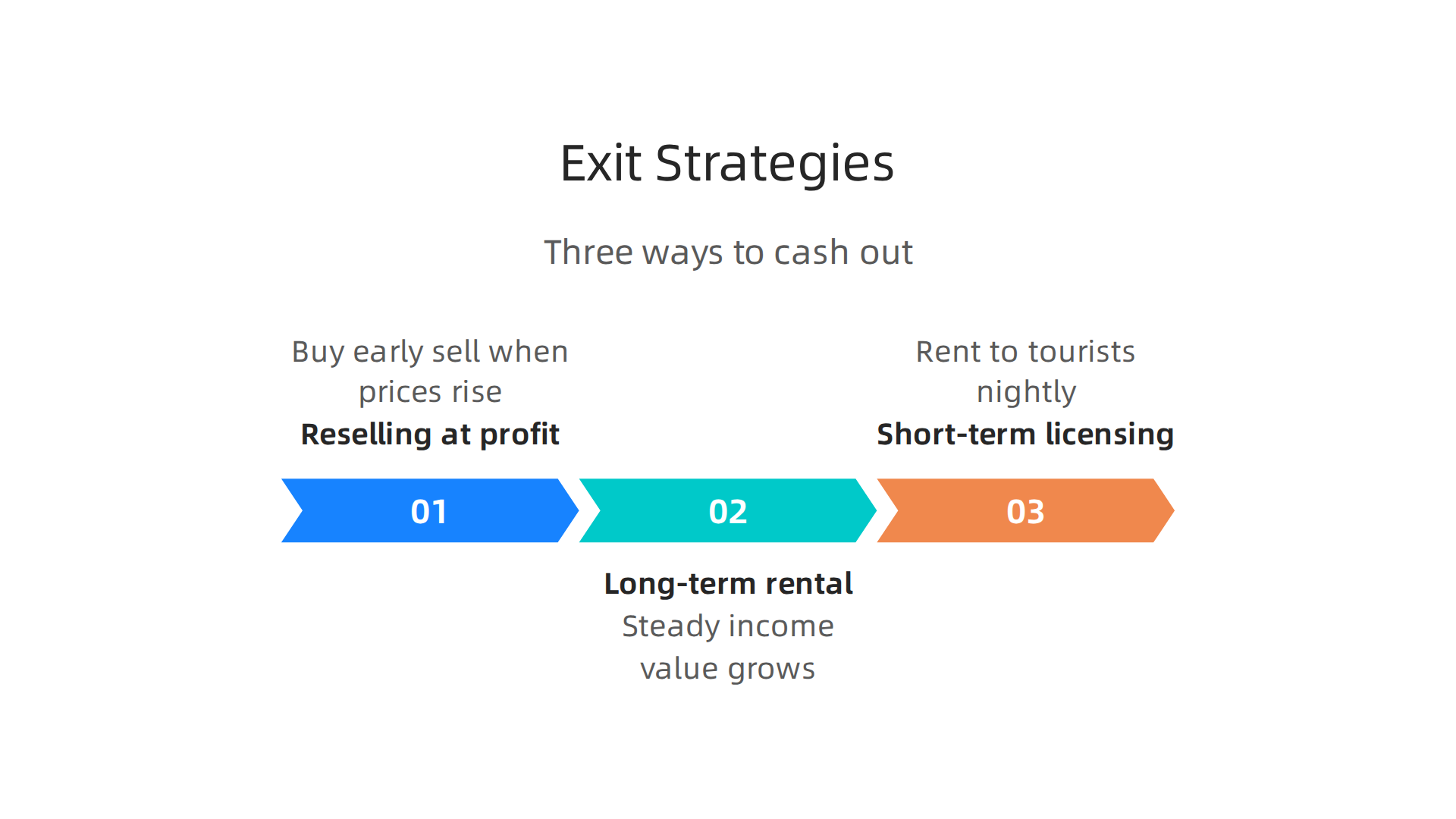
You do not have to hold a property forever. Smart investors plan their exit before they buy. Here are three common strategies for luxury homes in Dubai.
Reselling at a profit. You buy off-plan or newly built, wait for the area to mature, and sell when prices rise. This works best when you buy early in a growing neighborhood.
Long-term rental. You keep the property and rent it out year after year. The rental income gives you a steady return, and the property value grows slowly over time. This is a set-and-forget strategy.
Short-term holiday home licensing. Dubai allows homeowners to get a holiday home permit from the Department of Tourism and Commerce Marketing (DTCM). You rent the property by the night to tourists. Luxury villas near beaches or golf courses can earn higher nightly rates, but you need to manage bookings and maintenance.
Each exit strategy works best for different goals. If you want cash flow now, go for long-term rental. If you want a bigger lump sum later, reselling might be better. Holiday home licensing gives you flexibility to use the property yourself when you want.
For a complete look at how to pick a home that fits your investment goals, check out this luxury villa buying guide for Dubai. It covers location, amenities, and resale value in simple terms.
Once you know your ROI targets, you can move forward with confidence. And if you want personalized help matching properties to your goals, you can get a FREE Dubai Real Estate Consultation. The next section will show you exactly how to close the deal without getting surprised by hidden fees.
Summary
This guide explains why Dubai remains a top choice for luxury property buyers in 2026 and gives a clear, practical roadmap to make a smart purchase. It covers the market fundamentals — tax-free rental income, Golden Visa eligibility, and recent price growth — and compares top neighbourhoods like Palm Jumeirah, Emirates Hills, Dubai Hills and Tilal Al Ghaf. You’ll get a five-step walkthrough of the buying process for international buyers, a straightforward comparison of off‑plan versus ready homes, and a due‑diligence checklist to verify developers and escrow protection. The guide also shows how to estimate rental yields and plan exit strategies (resale, long-term renting, or holiday letting). Practical costs and transfer steps are explained so you can close without surprises. After reading, you’ll know where to look, what to check, and how to match a luxury property to your investment or lifestyle goals.