
Real Estate Investing in Dubai 2026: Navigate Challenges, Maximize Returns
· 23 min read
Why real estate investing in Dubai still matters in 2026 – and what most investors miss
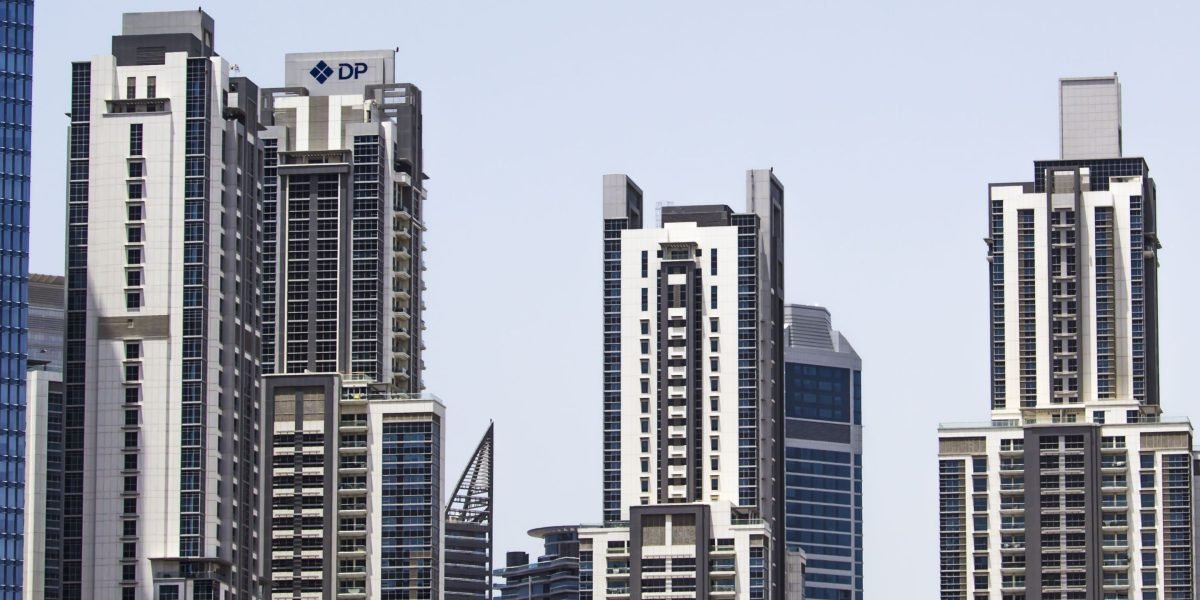
Dubai’s real estate market keeps shining bright in 2026. It’s a place where many people want to put their money. Why? Because it offers great chances for making money in different ways. Many people look at real estate investing in Dubai to earn regular income from rent. Others hope their property will be worth more over time, which is called appreciation. Some people simply want to spread out their investments, putting money into Dubai’s growing market to make their overall financial plan stronger.
Actually, Dubai’s real estate sector has seen amazing growth. For example, in the first three months of 2026, real estate deals in Dubai jumped by 31% in value compared to last year, reaching AED 252 billion, which shows strong confidence from buyers and investors alike Dubai’s real estate transactions surge 31% to reach AED 252 billion in Q1 2026.
This continued growth makes many real estate investors in Dubai feel positive about the future. If you are looking to invest in real estate in Dubai, understanding the market trends is key. You can learn more in our Dubai Real Estate Investment 2026: Your Strategic Investor Guide.
However, even with all these good points, many real estate investors in Dubai run into common problems.
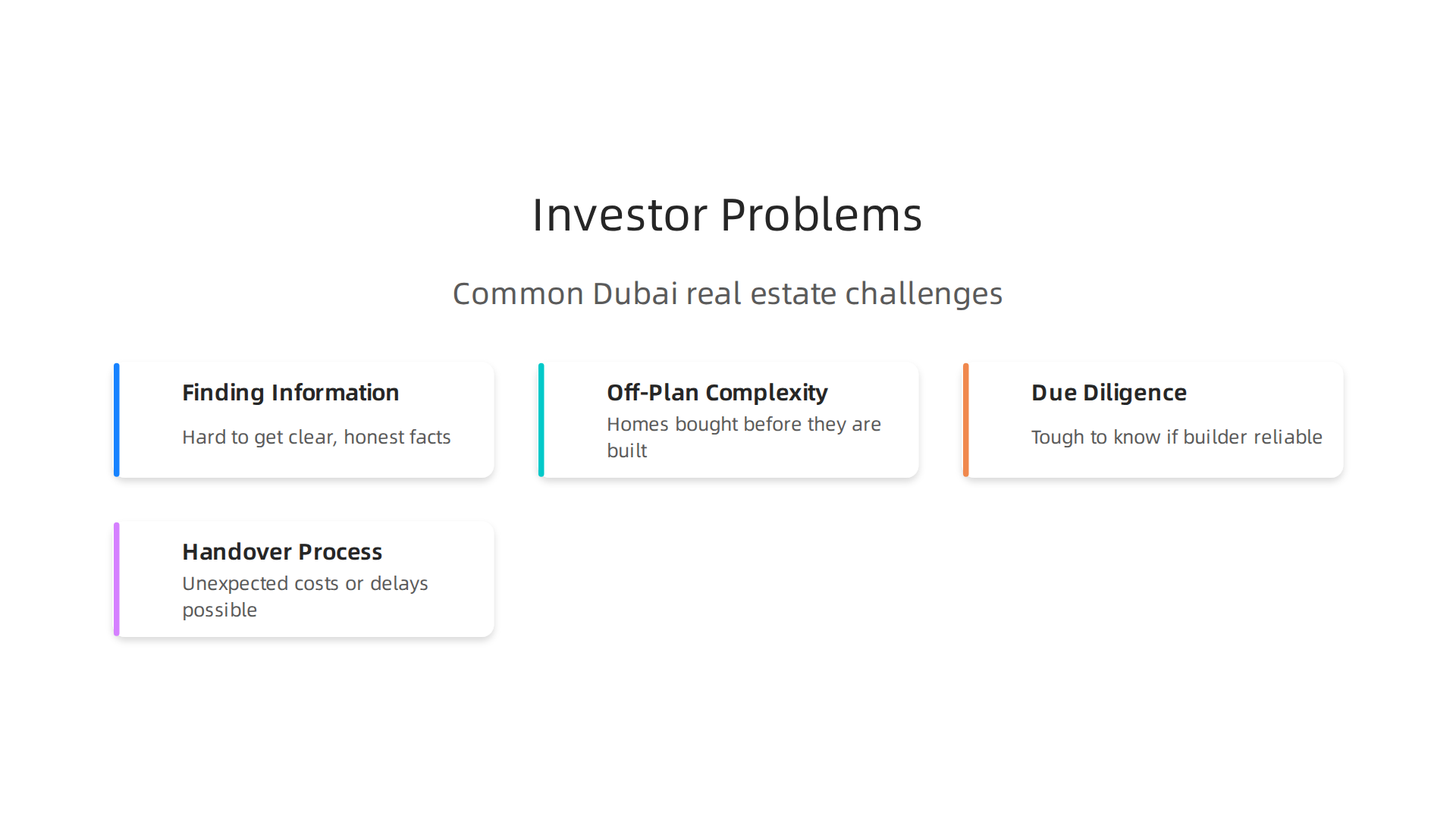
One big issue is finding all the right information. It can be hard to get clear, honest facts about different builders and projects because the data is spread out everywhere.
Another challenge is understanding "off-plan" properties.

These are homes bought before they are built, and they can be complex. Investors need to be very careful to check everything, which we call due diligence. It’s tough to know if a builder is truly reliable or if the project will really be worth it. Also, there are often worries about the handover process, which is when the property is finally ready for the owner. There can be unexpected costs or delays. These hurdles can make investing in real estate in Dubai feel tricky for newcomers and even experienced investors.
Are you looking to buy, sell, rent, or invest in Dubai? For help navigating these challenges and to make smart decisions, connect with an expert today.
FREE Dubai Real Estate Consultation
Dubai market snapshot: supply, demand, and growth drivers (2026 lens)
Even with challenges, many real estate investors in Dubai are keen to put their money here because the market has strong foundations. Looking at Dubai in 2026, we see clear reasons why it keeps growing. These reasons come from both big picture trends and local happenings that drive demand for property.
One big reason is the number of people moving to Dubai.

The city’s population is growing as more people come for work, business, and a good lifestyle. This means more people need homes to live in, whether they are buying or renting. Also, tourism is booming. Dubai is a top spot for visitors from all over the world. These tourists need places to stay, which creates a high demand for hotels, holiday homes, and short-term rentals. Businesses are also choosing Dubai. Many companies are moving their offices or expanding here, bringing employees who also need housing. This corporate relocation trend further boosts the need for properties, making real estate investing in Dubai very attractive.
When it comes to how many homes are available (inventory) and how many new ones are being built (supply pipelines), things are always changing. In the first three months of 2026, Dubai’s residential market saw a good number of sales, with 45,158 transactions, which was up by 4.2% from the year before Dubai Residential Market Review.
This shows that many people are still actively looking to buy property.
The city also saw residential prices go up. Citywide, prices for homes rose by 1.8% in the first quarter of 2026. Even though new projects are always popping up, the demand is often strong enough to keep prices stable or even rising in many areas. This mix of new homes and existing properties keeps the market lively. For those thinking about investing in real estate in Dubai, understanding these changes in supply and demand is crucial for making smart choices, especially if you are looking at different types of homes like apartments. You can find more details in our Apartment for rent in Dubai monthly 2026 guide.
Choosing the Right Community: Balancing Lifestyle, Yield, and Future Development
After understanding the big picture of Dubai’s real estate market, the next step for real estate investors in Dubai is to pick the right community.

This choice is super important because it affects how much money you might make and how easy it is to manage your property. Your personal goals for investing in real estate in Dubai will help you decide.
Do you want to rent out the property for a short time to tourists? Or do you want a long-term tenant? Maybe you just want the property’s value to grow over time so you can sell it for more later. Each goal needs a different kind of community.
- For Short-Term Rentals: If you plan to rent to tourists, you’ll want a lively area close to main attractions, beaches, or business hubs. Places with lots of restaurants, shops, and good transport links are often best. Think about how easy it is for guests to get around and what fun things they can do nearby.
- For Long-Term Rentals (Buy-to-Let): If you want steady income from long-term tenants, you should look for communities that families or working professionals like. This means good schools, parks, healthcare, and easy commutes to workplaces. These areas usually have a strong demand for rentals and offer stable returns.
- For Capital Growth: If your main goal is for the property to become much more valuable over time, you need to find areas that are still developing but have big plans for the future. These might be newer communities with major infrastructure projects coming soon, like new roads, metro lines, or big shopping malls. These changes can make property prices go up a lot.
Tools and Signals to Evaluate Neighborhoods
To make a smart choice, you need to look at more than just what’s there now. You also need to think about what’s coming next. Here are some key things to check:
- Planned Infrastructure: Look for news about new roads, public transport, hospitals, or schools that are planned for a certain area. Big projects like these can greatly increase a community’s appeal and property values.
- Developer Commitments: Top developers often have big plans for their communities, like adding parks, fitness centers, or special amenities. Knowing what a developer promises to build can tell you a lot about the future of the area. You can learn more about finding good partners in our guide on how to choose the best real estate company in Dubai.
- Community Vibes: Spend time in the area at different times of the day. Does it feel safe? Is it noisy or quiet? Does it have the kind of shops and cafes that suit your target renters or buyers? This "feel" of a place is very important for its long-term success.
- Rental Yields and Price Trends: Look at how much similar properties in the area are renting for and how their prices have changed over time. This helps you guess your possible income and capital growth. Many investors real estate depend on this kind of data.
Understanding these details is key to successful real estate investing in Dubai. It helps investors real estate make decisions that match their goals and avoid mistakes. For a full breakdown of how to pick the perfect location, you can check out our guide on how to buy property in Dubai in 2026.
Choosing the best type of property is a big step in real estate investing in Dubai. You might hear about "on-plan" and "off-plan" properties. These are two different ways to buy property, and each has its own set of risks, how long it takes, and how much money you might make.
On-plan properties are ready-to-move-in homes. They are already built, and you can see them before you buy. This means you know exactly what you are getting. You can start renting it out or living in it right away. The risks are usually lower because there are no delays in building, and you can see the quality of the construction with your own eyes. However, the price might already be higher since the property is finished, so there might be less room for its value to grow a lot.
Off-plan properties are homes that are still being built or are just plans on paper. When you invest in real estate in Dubai this way, you are buying a property before it’s completed.
Comparing Risks, Timelines, and Returns
Off-plan properties often come with more risks, but they can also offer bigger rewards. Here’s why:
- Payment Plans: Usually, off-plan projects have easier payment plans. You pay in steps as the building gets built, instead of a large sum all at once. This can make investing in real estate in Dubai more reachable for some.
- Potential for Growth: If you buy early, the property’s value might go up a lot by the time it’s finished. This is why many real estate investors in Dubai choose off-plan.
- Timelines and Delays: A big risk with off-plan homes is delays. Projects can take longer to finish than promised. In 2026, many off-plan handovers faced delays due to various issues like supply chain problems or labor shortages. Some reports show that construction delays are the most common issue for off-plan buyers, with many projects being postponed by months or even years Off-Plan Property Risks Dubai Investors Miss (2026 Guide …). This can mess up your plans for when you want to rent or sell.
- Developer Risk: The quality of the builder matters a lot. If a developer has problems or doesn’t finish projects well, it affects your investment.
A Simple Checklist for Off-Plan Opportunities
To help you make smart choices when looking at off-plan properties, here’s a simple checklist for investors real estate:
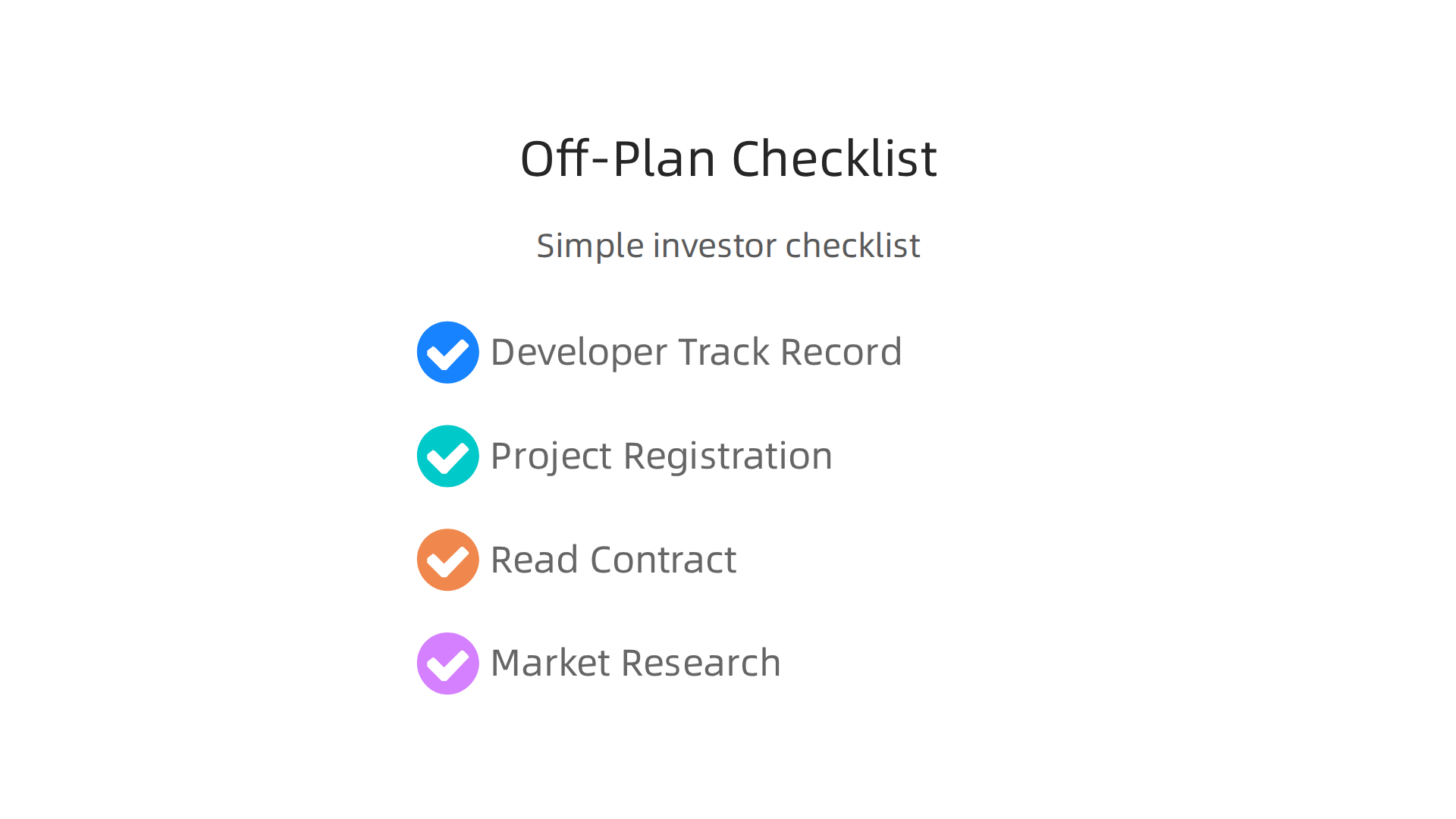
- Check the Developer’s Past: Look at their old projects. Did they finish them on time? Were buyers happy with the quality? Developers who consistently deliver close to their original dates are a safer bet Dubai Off Plan Risks Explained: What to Avoid 2026 | Oliva.
- Verify Project Registration: Make sure the project is officially registered with the Dubai Land Department (DLD) and has a special bank account (escrow account) for your payments. This protects your money if something goes wrong Off-Plan Risks in Dubai: What Developers Don’t Tell You.
- Read the Contract Carefully: Understand all the rules in the Sales Purchase Agreement (SPA). This includes what happens if there are delays, if you want to cancel, or if the property features change.
- Market Research: Think about what the market might be like when your property is ready. Will there still be high demand? Will prices still be rising?
Understanding these differences helps you decide if on-plan’s certainty or off-plan’s potential is a better fit for your goals in real estate investing in Dubai. For a deeper dive into these topics, read our comprehensive Dubai real estate investment 2026 off-plan buying guide and due diligence checklist.
Choosing off-plan properties for real estate investing in Dubai means you need to be extra careful about who you buy from. You want to make sure the developer is reliable and will finish the project as promised. This is called "developer due diligence," and it helps real estate investors in Dubai avoid big problems.
Checking a Developer’s History and Money
When you think about investing in real estate in Dubai, especially with off-plan homes, checking the developer is super important. Here’s what you need to look into:
- Past Projects: Just like checking reviews for a new restaurant, you should check what other projects the developer has finished. Did they finish them on time? Was the quality good? You can look at public records to see their past work and how close they came to their promised dates. This helps you guess if they’ll finish your project on time too. Knowing a developer’s history helps lower your risk when buying off-plan Dubai Off-Plan Properties 2026 – Payment Plans & Risks.
- Escrow Accounts: This is a big one for off-plan property in Dubai. When you pay for an off-plan home, your money should go into a special bank account called an escrow account. This account is managed by a third party, like a bank, not directly by the developer. Dubai has laws, like Law No. 8 of 2007, that make this a must for developers selling off-plan units. This helps protect your money. The developer can only get money from this account in steps, after they’ve finished certain parts of building, and this has to be checked by experts. This system helps keep your money safe until the work is done Dubai Off-Plan Escrow Law: Buyer Protections Explained (2026). The rules in 2026 mean developers cannot touch your funds from these special accounts unless construction milestones are met and verified Dubai Real Estate Regulations 2026: The Ultimate Investor ….
- Financial Health: While it’s hard to see a developer’s full financial details, their past projects and how well they manage escrow accounts can give you clues. Developers who often delay projects might be having money problems. It’s best to work with companies that have a strong reputation and a clear record of handling their money well.
- Warranties and Support: Understand what kind of guarantees the developer offers after the property is built. What if there are issues after you move in? Good developers offer clear warranties and good after-sales support. This is important for any investor, especially for those new to the market.
Taking the time to check these things makes a big difference for anyone looking to invest in real estate in Dubai. It protects your money and helps you make a smarter choice.
If you are looking for guidance with your next property move in Dubai, make sure to connect with an expert.
FREE Dubai Real Estate Consultation
To learn more about how to find reliable partners in your investment journey, consider reading our guide on how to choose the best real estate company in dubai 8 key criteria.
When you’re thinking about real estate investing in Dubai, looking closely at how you’ll pay for it and what you expect to get back is just as important as checking on the developer. This part is all about money matters: how to finance your purchase, the taxes involved, and figuring out if your investment will grow.
How to Pay for Your Dubai Property
There are a few ways to pay for property in Dubai. Many investors, especially those with a lot of money, might choose to buy with cash. This means they own the property outright and don’t have to worry about loan payments.
However, most people use a loan, often called a mortgage.
- For Residents: If you live in Dubai, getting a mortgage from a local bank is usually straightforward. Banks will look at your job, how much you earn, and your credit history to decide how much they can lend you.
- For Non-Residents: Even if you don’t live in Dubai, you can still get a mortgage. Some banks offer special loans for people living outside the UAE who want to invest in real estate in Dubai. The rules might be a bit different, like needing a larger down payment, but it’s definitely an option.
Using a loan for your investment is called "leverage." It means you’re using borrowed money to buy a property. If the property value or rental income goes up a lot, leverage can make your own money grow faster. But be careful: if things go badly, you could lose money faster too. It’s a tool that can boost returns for real estate investors in Dubai, but it also comes with bigger risks.
Understanding Taxes and Fees
One of the great things about investing in real estate in Dubai is the tax system. Generally, there’s no income tax, capital gains tax (tax on profit when you sell property), or ongoing property tax. This can make your investment more profitable compared to many other countries.
However, there are fees to know about:
- Dubai Land Department (DLD) Fees: When you buy a property, you usually pay a DLD fee, which is a percentage of the property’s value. This is a one-time cost when you buy.
- Other Small Fees: There might be other minor admin fees or service charges, especially for new properties or specific communities. Always ask your real estate agent or lawyer for a full list of all fees before you buy.
How to Model Your Return on Investment (ROI)
ROI, or Return on Investment, tells you how much money you make from your investment compared to what you put in. For real estate investing in Dubai, there are two main ways properties make money:
-
Rental Income (Rental Yields): This is the money you get from tenants who rent your property. Dubai is known for having strong rental yields. In 2026, the average rental yield across Dubai was about 6.68%, but this can change a lot depending on where the property is and what type it is, like apartments or villas Average Rental Yields in Dubai – 2026 Market Insights.
- For example, apartments generally offer higher rental yields than villas, averaging around 7.15% in 2026 Dubai Rental Yields 2026: Gross vs Net.
- Some areas, like Jumeirah Village Circle (JVC) or Dubai Silicon Oasis, can show even higher gross yields, sometimes up to 8.5% or more, especially for smaller units like studios Dubai Rental Market 2026: Where Yields Are Highest and Why.
-
Capital Appreciation: This is when the value of your property goes up over time. If you buy a property for one price and sell it for a higher price later, that’s capital appreciation.
To figure out your potential ROI, you need to:
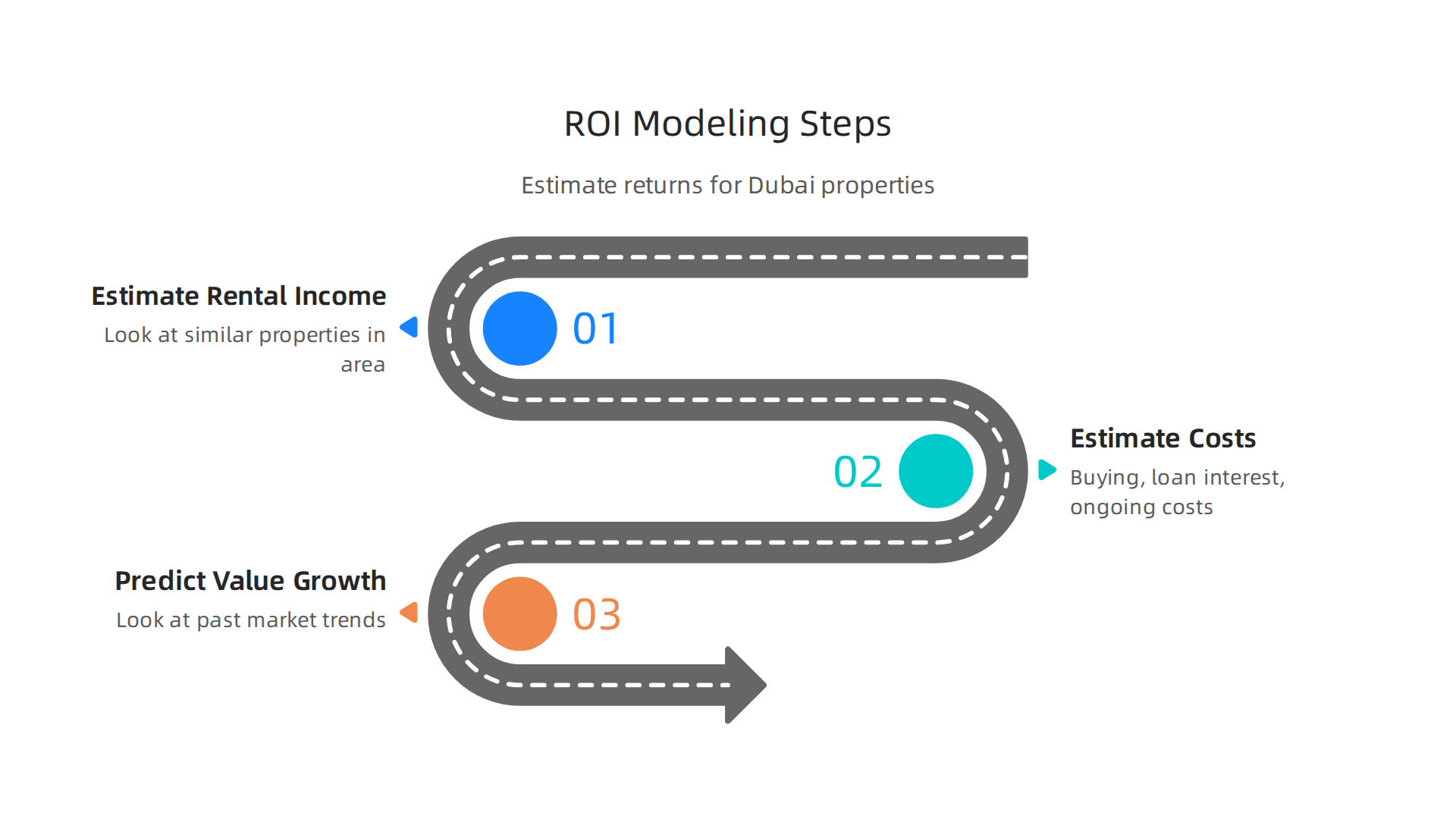
- Estimate Rental Income: Look at similar properties in the area to see how much they rent for.
- Estimate Costs: Add up all your buying costs (like DLD fees), any loan interest, and ongoing costs like service charges or maintenance.
- Predict Value Growth: This is harder to guess, but looking at past market trends can help.
A Simple ROI Model:
Let’s say you buy a property for AED 1,000,000.
- Annual Rental Income: AED 70,000 (7% rental yield)
- Annual Costs: AED 10,000 (service charges, maintenance)
- Net Annual Income: AED 60,000
- If the property value goes up by 3% (AED 30,000) in a year.
Your total return is AED 60,000 (net income) + AED 30,000 (value increase) = AED 90,000.
Your ROI would be (AED 90,000 / AED 1,000,000) * 100 = 9%.
Sensitivity Checks:
It’s smart to run "what if" scenarios.
- What if rents go down by 10%?
- What if service charges go up by 5%?
- What if the property value doesn’t change?
- How would these changes affect your 9% ROI?
This helps you see how risky your investment might be under different conditions. Doing this kind of math helps real estate investors in Dubai make smart decisions. To dive deeper into making informed choices, consider reading our Dubai real estate investment 2026 strategic investor guide.
After you’ve looked at the money side of things, the next big step for real estate investors in Dubai is understanding the journey from buying to finally getting the keys. This process, especially for properties that are still being built (called "off-plan"), has important legal steps, inspections, and possible issues you need to know about.
Your Property Journey: From Reservation to Handover
Buying property in Dubai follows a clear path. Here’s a simple look at the steps:
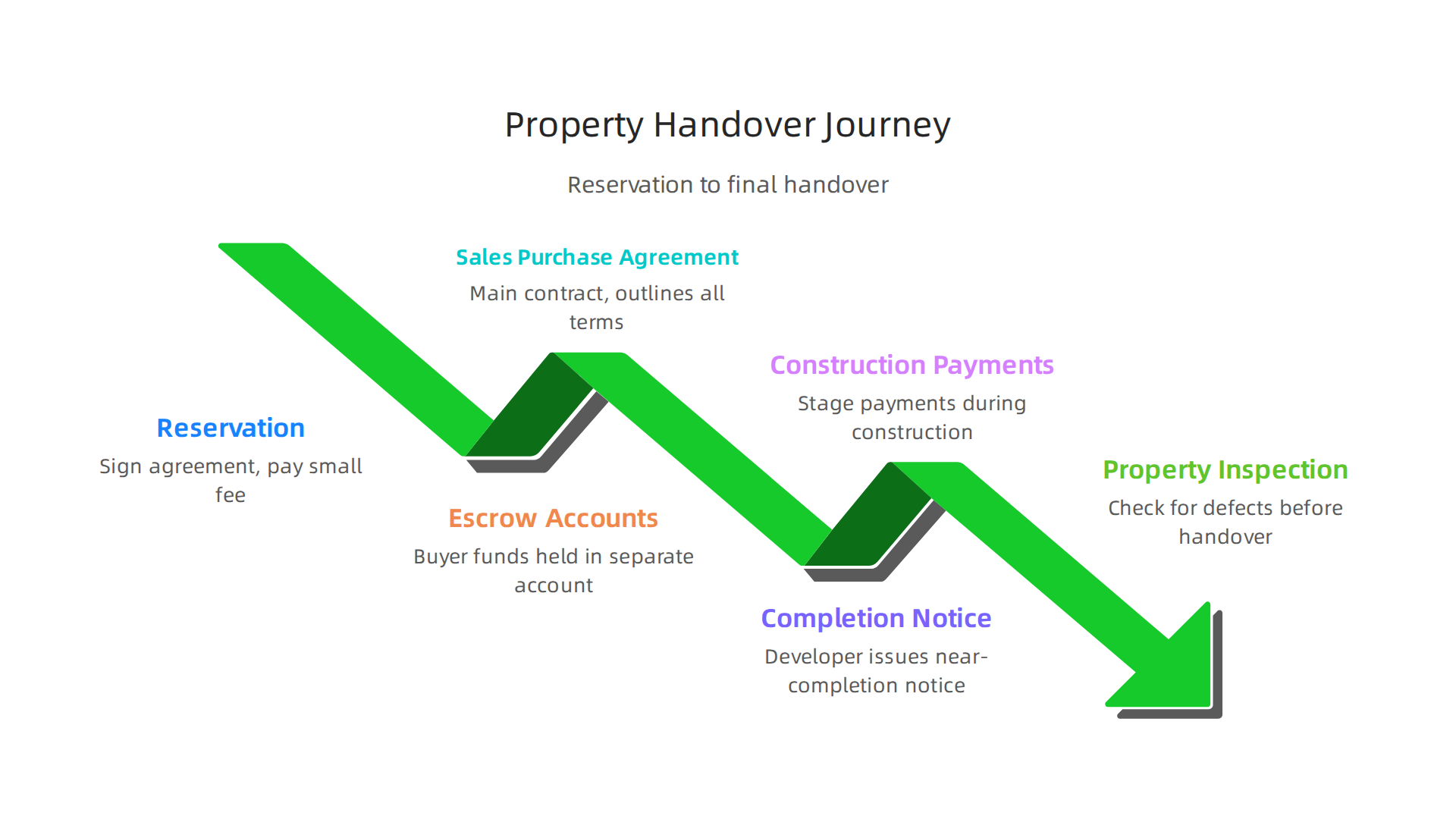
- Reservation: First, you sign a Reservation Agreement and pay a small fee to hold the property. This shows you’re serious about buying.
- Sales Purchase Agreement (SPA): Next, you’ll sign a Sales Purchase Agreement (SPA) with the developer. This is the main contract that lays out all the terms, like the price, payment plan, and completion date. It’s very important to read this carefully.
- Escrow Accounts: A key protection for those investing in real estate in Dubai, especially off-plan, is the use of escrow accounts. Dubai has special laws, like Law No. 8 of 2007, that make sure developers put buyers’ money into a separate bank account for each project. This means the developer can only take money out as they complete parts of the building, which is checked by independent experts. This helps keep your money safe and makes sure the project gets built Dubai Off-Plan Escrow Law: Buyer Protections Explained (2026). The Dubai Land Department (DLD) and RERA oversee these accounts, protecting investors’ real estate in Dubai RERA Dubai 2026: Buyer Rights, Escrow & Developer Rules.
- Construction & Payments: You will make payments in stages as the building work progresses, according to your payment plan in the SPA.
- Completion Notice: When the property is almost finished, the developer will send you a Completion Notice. This means it’s nearly time for you to take over your new property.
- Property Inspection (Snagging): This is a very important step. You or an expert you hire will inspect the property to find any small problems or defects, known as "snags." You’ll check everything from the walls and floors to the plumbing and electricity Dubai Property Handover: What to Check Before You Move In.
- Final Payment & Handover: Once any identified issues are fixed, you’ll make your final payment. Then, the developer officially hands over the property, and you get your keys. You’ll also complete the registration with the DLD to get your property title deed. You can learn more about this whole journey in our Dubai real estate investment 2026 off-plan buying guide and due diligence checklist.
Avoiding Handover Pitfalls: Inspections and Snagging
One common issue that real estate investors in Dubai face is handover delays or discovering defects in their new property.

In 2026, delays are still a big risk for off-plan projects, often due to things like material shortages or problems with planning Why Are Off-Plan Property Handovers Delayed in Dubai 2026?. It’s very important to be ready for your inspection.
Common Handover Defects:
When you inspect, look for:
- Walls, Floors, and Ceilings: Check for cracks, uneven paint, or broken tiles.
- Doors and Windows: Make sure they open, close, and lock properly. Look for scratches.
- Plumbing: Test all taps, showers, and toilets. Make sure drains work well and there are no leaks.
- Electrical: Check all light switches, plug sockets, and the air conditioning in every room.
- Fixtures and Fittings: Look at cabinets, countertops, and appliances (if included) for any damage.
How to Structure Snagging Claims:
- Be Prepared: Bring a checklist, a camera, and even a small notepad. Take detailed notes and photos of every single issue you find.
- Be Thorough: Don’t rush. Test everything, even small things.
- Formal Report: Submit a formal snagging report to the developer with all the details, photos, and clear descriptions of what needs fixing.
- Follow Up: Make sure the developer fixes everything agreed upon before you sign the final handover papers. Do a second inspection if needed.
Protecting your investment value means being careful at every step, especially during the handover. If you’re looking for expert help with any part of your real estate journey in Dubai, remember to reach out.
Buying, selling, renting, or investing in Dubai? Connect with Ayaz Salman for a FREE Dubai Real Estate Consultation.
After you have taken ownership of your property, your journey as a real estate investor in Dubai is still ongoing. To make sure you get long-term profit, it’s smart to think about what you will do with your property in the future. This means planning your exit strategies and getting ready for how the market might change.
Exit strategies and managing market volatility for long-term profit
Planning ahead helps real estate investors in Dubai get the best returns.

There are a few main ways to manage your property and money over time:
When to consider different strategies
- Selling Your Property: This is often the goal for many investors looking to cash out their profits. Dubai’s property market has shown strong growth, with residential prices across the city rising by 1.8% in the first quarter of 2026, reaching AED 1,933 per square foot Dubai Residential Market Review. Knowing when to sell means keeping an eye on market trends and waiting for prices to be high enough for a good profit.
- Refinancing Your Loan: Sometimes, you can get a new loan with better terms. This can lower your monthly payments or let you take out some of the equity (the part of the property you own) to invest in other places. This can be a smart move if interest rates drop or your property value has gone up a lot.
- Switching Asset Strategies:
- Short-Term Rentals: You might turn your property into a short-term holiday rental. This can bring in more money, especially in popular tourist spots. But it also means more work managing guests and upkeep.
- Long-Term Rentals: Keeping your property for long-term tenants can offer a steady income. Dubai is known for its strong rental returns. For example, in April 2026, the average rental yield in Dubai was about 6.68%, with apartments generally offering even higher yields Average Rental Yields in Dubai – 2026 Market Insights. This can be a good choice for investors real estate looking for stable income.
How to stress-test your investment against market changes
Even with a strong market, it’s wise to be ready for ups and downs. This is called stress-testing your investment.
- Price Corrections: What if property prices drop? Some reports in 2026 suggest understanding the possibility of price corrections, even with overall market growth Dubai Real Estate 2026: Correction, Conflict & Data. Think about how much you can afford to lose if prices fall and how long you can hold onto the property without needing to sell. Having extra savings can help you ride out these times.
- Rental Downturns: What if rents go down, or your property sits empty for a while? Calculate if your rental income would still cover your costs if rents dropped by 10% or 20%. Consider having a savings buffer for a few months of no rental income.
When investing in real estate in Dubai, thinking about these "what if" scenarios helps you make better choices and protect your money. A clear strategy for when and how you’ll exit your investment, or change its use, is just as important as choosing the right property. To dive deeper into making smart investment choices, check out our Dubai real estate investment 2026 your strategic investor guide.
Summary
Dubai’s property market remains a compelling option in 2026 thanks to rising transactions, population growth, strong tourism and corporate demand that support both rental income and capital appreciation. This article explains the current market picture, how to choose the right neighbourhood depending on whether you want short‑term rent, long‑term yield or capital growth, and the practical differences between on‑plan and off‑plan purchases. It walks you through essential developer due diligence—past delivery record, escrow protection and warranties—plus the financing options, key fees, and a simple ROI model to stress‑test your assumptions. You will also get a step‑by‑step view of the buying-to‑handover journey, a snagging checklist to avoid defects, and exit strategies to manage volatility so you can make better, safer investment decisions in Dubai.